






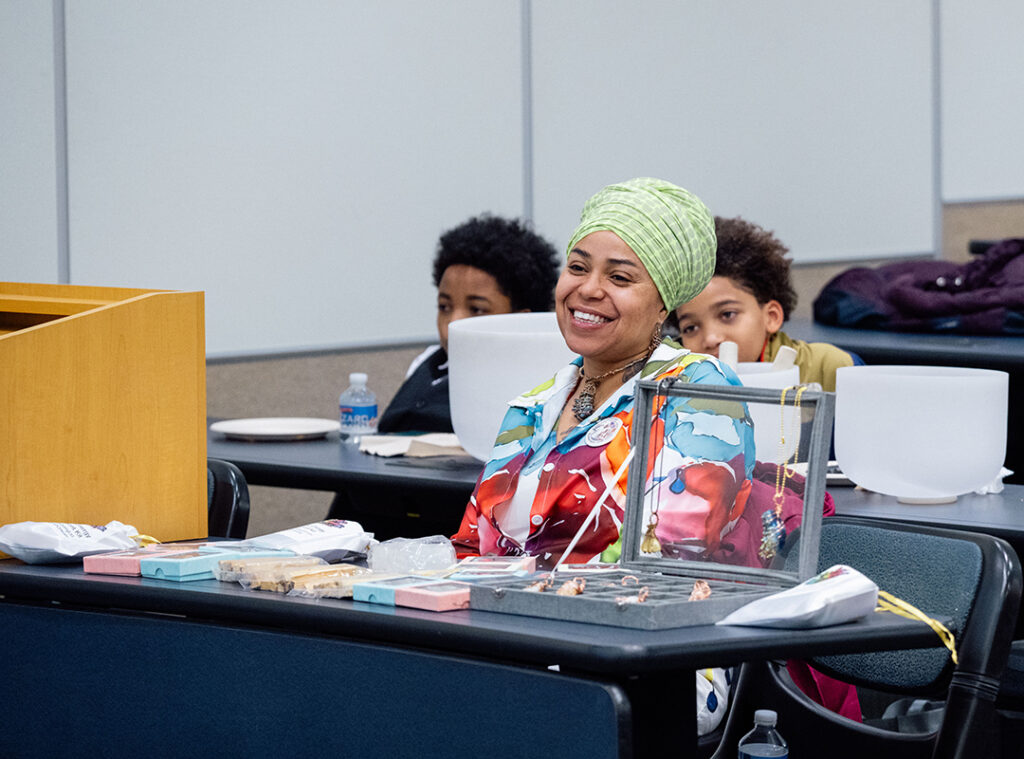
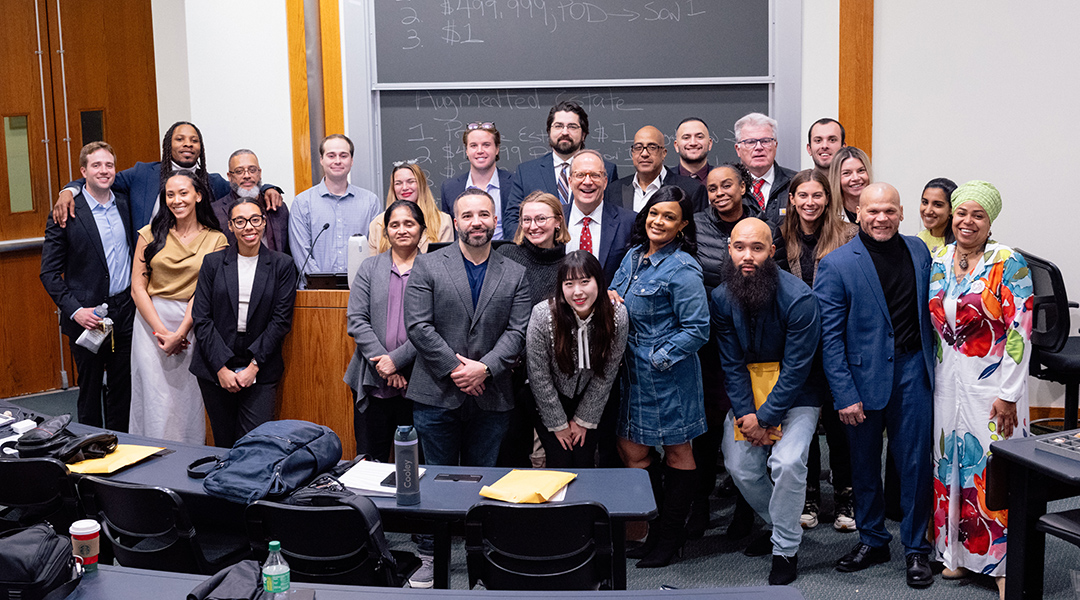
An undercurrent of nerves and excitement filled a BC Law classroom in early December, as more than 50 students, mentors, and investors gathered to hear entrepreneurial business pitches from 12 individuals with criminal records. They had received legal advice on how to form a company from students in BC Law’s Project Entrepreneur clinic, which is designed to enable the formerly incarcerated to successfully reenter society through the creation of businesses that provide them with the means to make a living—and also the opportunity to give back to their communities.
This year marks the ninth pitch night for Project Entrepreneur since the clinic’s formation in 2016 by adjunct professor Lawrence Gennari. The idea came to him after his years teaching Mergers and Acquisitions and Corporate Finance at BC Law. He wondered: What if we could find a way to directly help those exiting incarceration who face real structural barriers, and also help students comply with the then-new American Bar Association experiential learning requirements? Now, almost 10 years later, Project Entrepreneur has its largest cohort yet.
The entrepreneurs offer solutions to very real problems. The law students offer their entrepreneur clients legal advice and practical solutions, giving them a unique opportunity to develop their own counseling style and approach. This year’s pitches followed a common theme: an explanation of who the entrepreneur was, why their idea matters, both to them and to the community, the secret recipe for their success, and a specific “ask” to conclude.
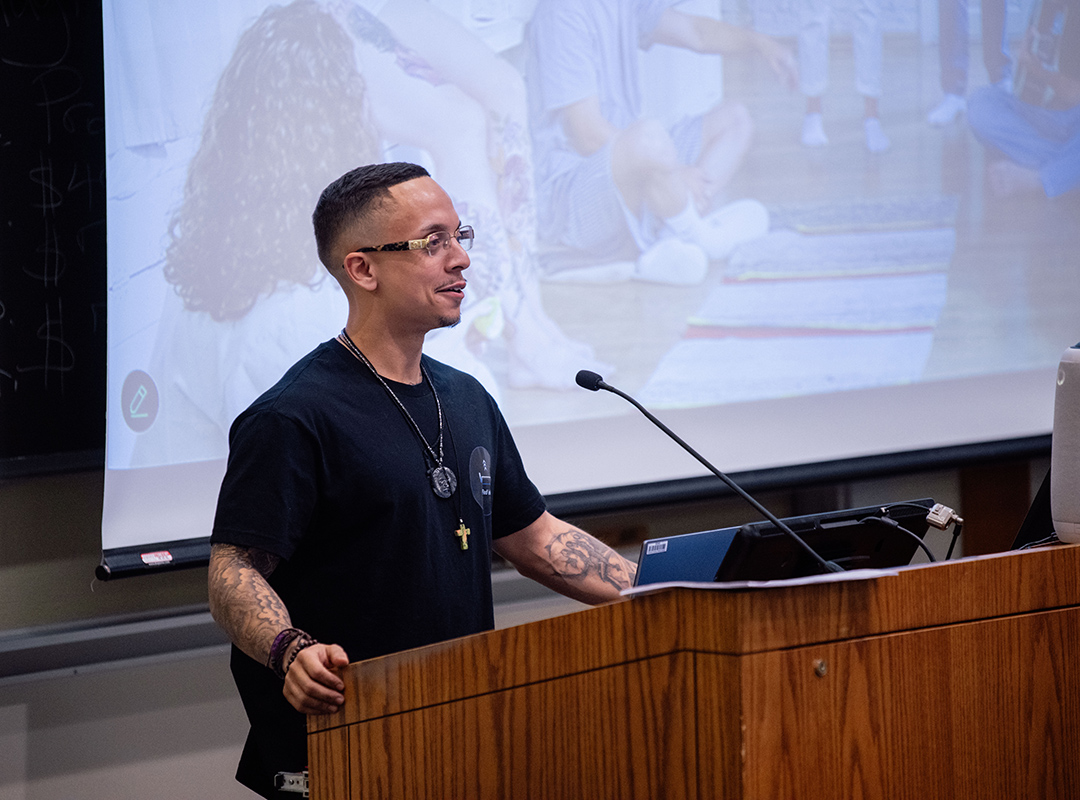
When Adam Liccardi pitched his idea for BedLink, describing it as an “AirBnB for reentry housing,” the audience began to murmur and then cheered their support. Liccardi referenced a man he knew who had to wait thirteen months to find a permanent place to sleep after leaving prison. When Liccardi himself was released, it was New Year’s Eve, it was snowing, and he had no place to go. He thought he would have to sleep under an overpass. “I had to do something I hadn’t had to do for 10 years,” he joked. “I had to ask a cop for help.” He described the reentry housing crisis as “a moral issue.” His solution? To create an online marketplace connecting people leaving incarceration with safe, stable housing. In addition, his company would help convert unused beds, off-season motel rooms, and empty apartments into licensed rooms for reentry.
Although often monetary, each client’s ask reflected a variety of needs. For Ebony LePenn, a licensed massage therapist, it was a van to launch her customized wellness curriculum, which would support members of her local community who are in the transition from various causes of stress and trauma to resilience and healthy coping skills. For Christopher Taylor, it was marketing and production methods for his CBD-infused topical cream for pain relief and skin ailments, which he created and formulated. For Stacey Hynes, it was a location for her nonprofit, multi-service funeral home. Others presented woodshop programs for at-risk youth; providing service dogs for individuals affected by community trauma; an electric-powered freight company for hazardous materials; a podcast to amplify the stories of those previously incarcerated; and a free transportation system for families to visit their loved ones in prison.
Clients brought their children and family members. An atmosphere of support permeated the space. The entrepreneurs opened up about their personal struggles and triumphs and what makes them uniquely qualified to launch their business, bringing awareness to systemic issues often swept under the rug.
The struggles of people reentering society have inspired Gennari to find solutions beyond just jobs or housing. “It’s not enough to get somebody an ID and simply say, great, we got you a job at Target, show up,” Gennari explained. He’ll hear from one of the clinic’s entrepreneurial clients who missed class because they lost their job and had to interview for another one. Or they might apologize for being late, explaining that they’d been sleeping in their truck. “That’s a big deal,” Gennari said. His ultimate vision is to create a center at Boston College for reentry, signaling a deep commitment from BC to a continuity of services for those exiting prison. “As a university, we should be doing more of that wraparound work that is so critical to [a successful] reentry.”

Since it was last featured in BC Law Magazine, Project Entrepreneur has established a partnership with both Boston College’s Prison Education Program, which provides programming and teaching in prisons, and also the Woods School for Continuing Studies. Students enrolled at Woods who were also previously incarcerated can participate in the clinic as an independent study for credit, not just a certification of completion. “Last year I had two Woods School students,” Gennari said. “This year I have five.” Liccardi is one of those five, an enrolled student of the Woods School who is simultaneously a client in the clinic. Liccardi and the other four students are given separate assignments and an additional capstone project, allowing them to receive educational credit toward their degree for their work.
The clinic’s mission is a crucial one: More than 70 million people in the United States have a criminal record, and experts have estimated that will grow to 100 million by 2030. Many of them struggle when they are released because of their record—and indeed, a national database maintained by the federal government reflects this challenge as it details the myriad federal and state by state restrictions that limit returning citizens from applying for certain kinds of housing, employment, or professional licensing.
One of the only post-incarceration reentry programs at a law school in the country, Project Entrepreneur receives client referrals from social workers, chaplains, and federal judges. Each client is paired with a law student, and the clinic also invites outside business mentors to come and share their advice and perspective. “For the business mentor, this is often the first time they’ve ever met somebody with a criminal record, in some cases somebody from a marginalized community. So it’s really kind of fun to see their eyes open as well,” Gennari said. “And contact eliminates bias, builds community, and builds hope.”
BC Law Magazine previously covered Stacey Borden, an entrepreneur who pitched a transitional home for women coming out of prison. After her clinic pitch presentation in 2019, an audience member bought her a building, which helped her realize her goal. Borden attended the presentation this year, a symbol of the clinic’s success.
For Gennari, launching a business is not the only positive result. “Yes, I’m thrilled if we can create entrepreneurial businesses,” he said. “But I’m also OK if what clients take from this experience is an entrepreneurial mindset and the confidence to embrace returning to the community and building even more contacts.” The clinic seems to recognize and promote a deeper truth. As Gennari put it: “I think BC has always embraced the ethos that we should be men and women for others, that we are all more than the worst thing we’ve ever done, and that everyone deserves not just a second chance, but a fair chance.”
Photography by Andres Leiva ’26