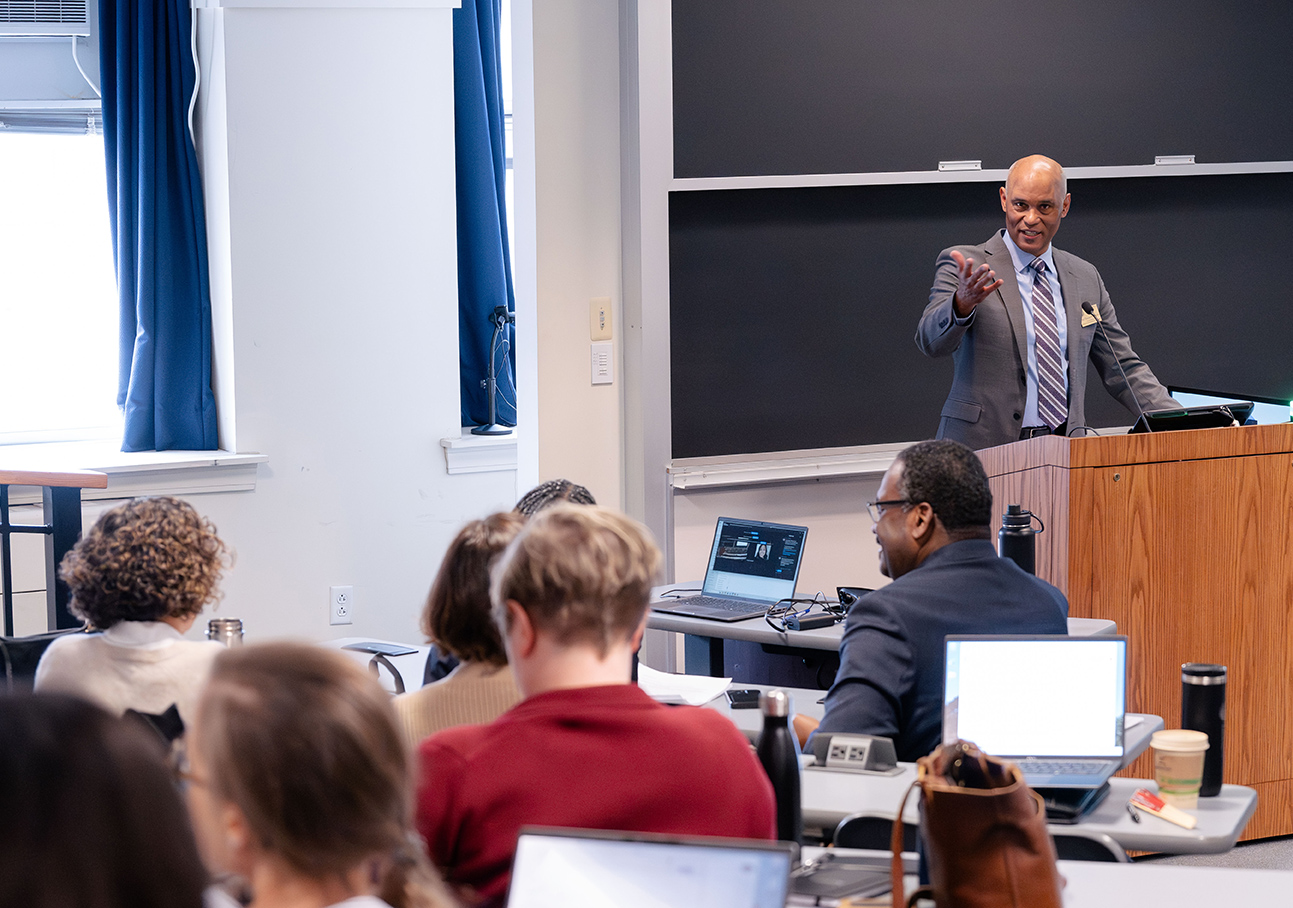






In 2026, affordable housing feels like an oxymoron, not a government initiative. Yet, at the fourth annual Initiative on Land, Housing & Property Rights (ILHPR) conference, held at Boston College Law School in March, panelists and speakers offered hope for a future housing system that cultivates inclusive communities and a stable foundation not just for the lucky few who can purchase a home. To see this future, however, change is needed.
The conference tackled topics ranging from the racial homeownership gap that has only widened since the 1960s to creative solutions like using state surplus land for subsidized housing to accommodating renters who do not follow the traditional homeownership trajectory.
Professor Thomas Mitchell, founder and director of ILHPR, welcomed the attendees to the two-day event which began with a roundtable discussion on innovative ways to build a home. The conference is grounded in the belief that home is more than a wealth-building tool; it offers stable shelter, a connection to the land, and a place to build relationships with neighbors.
The opening roundtable touched on ways to support this vision by discussing the Massachusetts Affordable Homes Act, models that support long-lasting affordability, and the interaction between federal and state programs. Amidst the talk of past struggles and future goals, Ingrid Gould Ellen, the director of the Furman Center for Real Estate and Urban Policy at NYU, cautioned the audience not to forget about the public housing that already exists. “Before we get too excited about building new social housing, we need to fix the social housing that we have,” Gould Ellen said.
One theme that emerged throughout the conference is the overarching purpose behind home ownership. Rachel Meltzer, an associate professor of planning and urban economics at Harvard, acknowledged during the roundtable session that ownership is often assumed to be a tool for wealth-building. She also offered another purpose, one of stabilization and shock-resilience for climate or economic events.
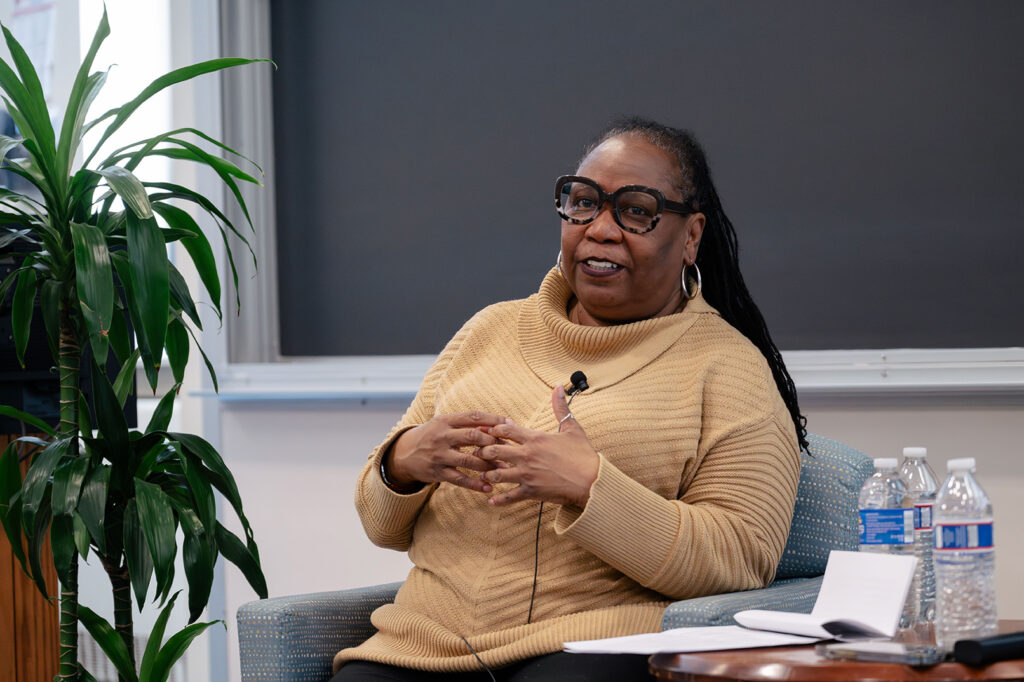
Taking up this theme of purpose during the fireside chat, Chrystal Kornegay, chief executive officer of MassHousing, emphasized that home ownership should be a way to build wealth, but families need to better access to the housing finance system. She addressed the racial inequities that are still built into the housing system through racially restrictive covenants, deed construction, and wealth gaps.
There are a lot of reasons for the racial home ownership gap and they are all intentional, according to Kornegay. “This country knows how to make homeowners. And they know how to keep people from taking advantage of the systems they’ve developed,” she said, adding that a key step is educating Realtors as well as the general public. “We have to help people figure out what assets to have and how to keep their home.”
Danielle Sommer Kieta, policy director of Homes for All Massachusetts, pushed back on focusing on wealth-building as the primary purpose of home ownership. During a panel on the concept and impact of social housing, she offered a model that recognizes housing as a foundational need, rather than an economic investment. “There are so many emotional and financial ties we have created in home ownership. That’s likely not a really sustainable model,” Sommer Kieta said. “Not everybody can be a homeowner. We can use other things to create generational wealth.”
Each panelist supported social housing, defining the growing concept with phrases such as, “permanently affordable,” “democratically controlled,” and “decommodified and protected from the private market.” The discussion centered on the practicality of social housing, what it means to have residents and communities in control, and ensuring consistent wealth-building for multiple subsequent owners rather than one-time windfalls. “It’s not just about having a roof over your head, but building a community,” asserted moderator Christopher Herbert, managing director of Harvard’s Joint Center for Housing Studies.
Community, social equality, and security, as well as wealth-building and economic stability surround the concept of property rights and affordable housing, encompassing more than just ownership. Professor Lisa Alexander, BC Law’s faculty director of housing and property rights at the ILHPR, expanded the conversation to include the growing proportion of long-term renters, those who have stayed in their rental unit for 10 or more years. There have been significant increases in long-term tenants from 2009 to the present, and public policy and legal solutions need to think about assisting and empowering this population.
With a final panel on promoting property justice and civil rights in land use, and closing remarks by Mitchell, the conference embodied the goals of ILHPR, seeking to preserve and expand property rights for disadvantaged communities across the United States through research, legal reform, and policy solutions.
Photographs by Andres Leiva