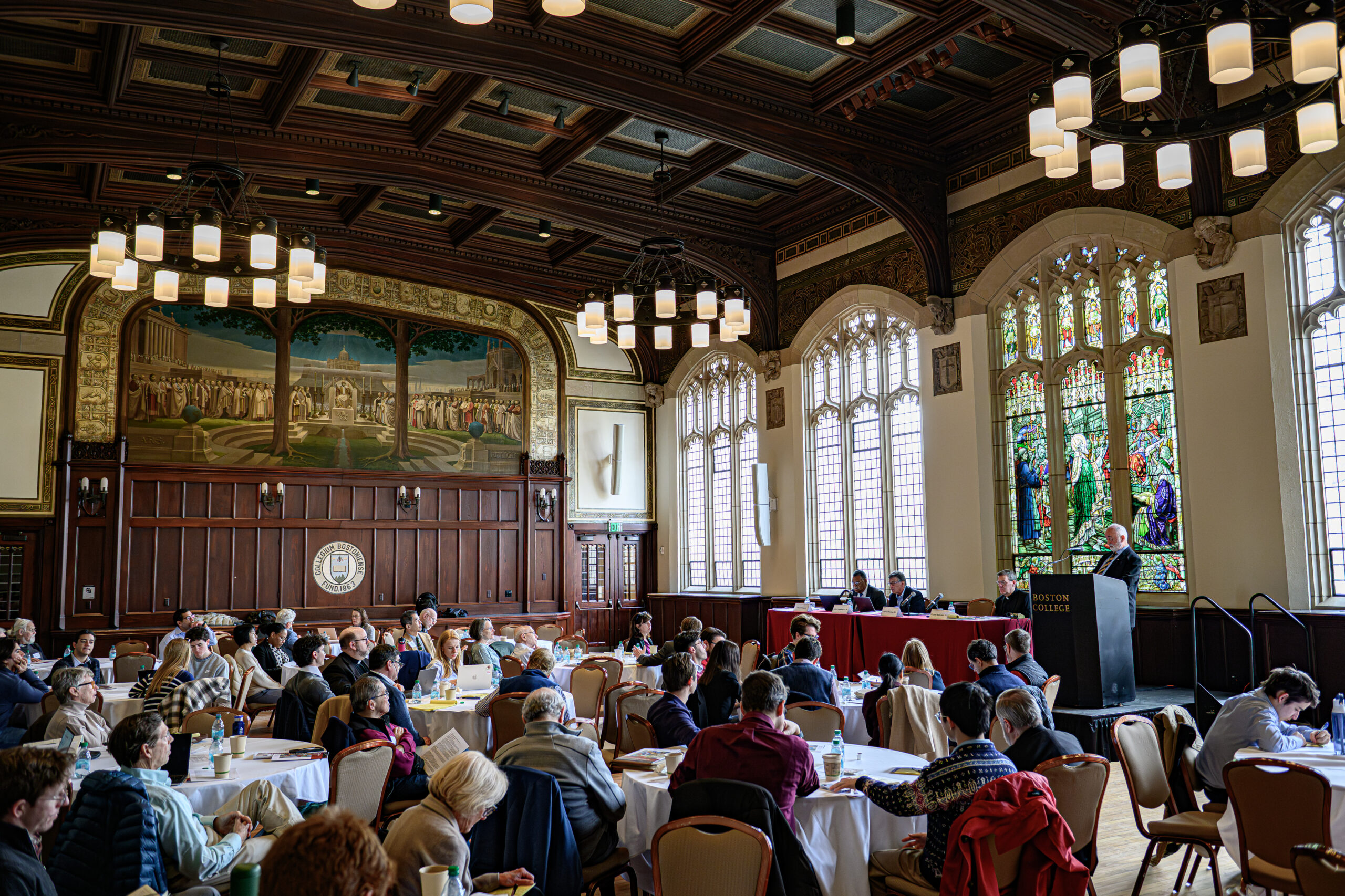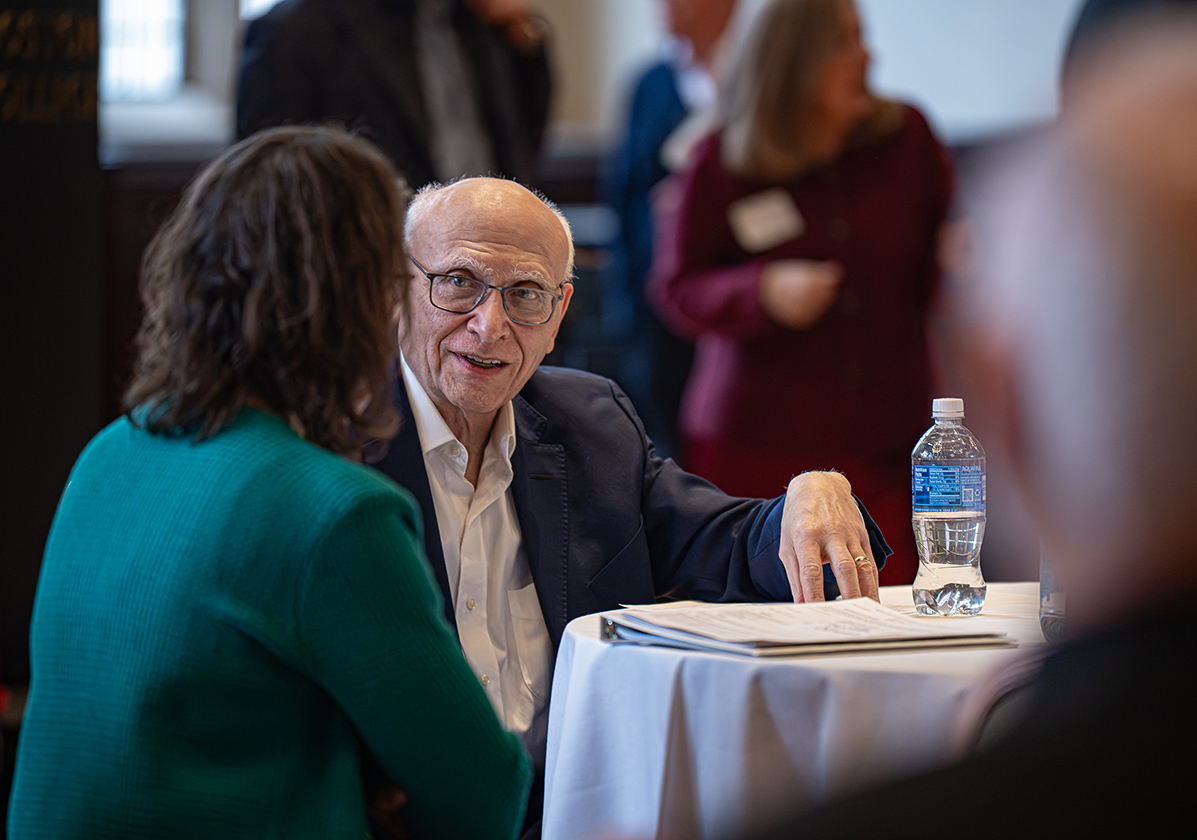






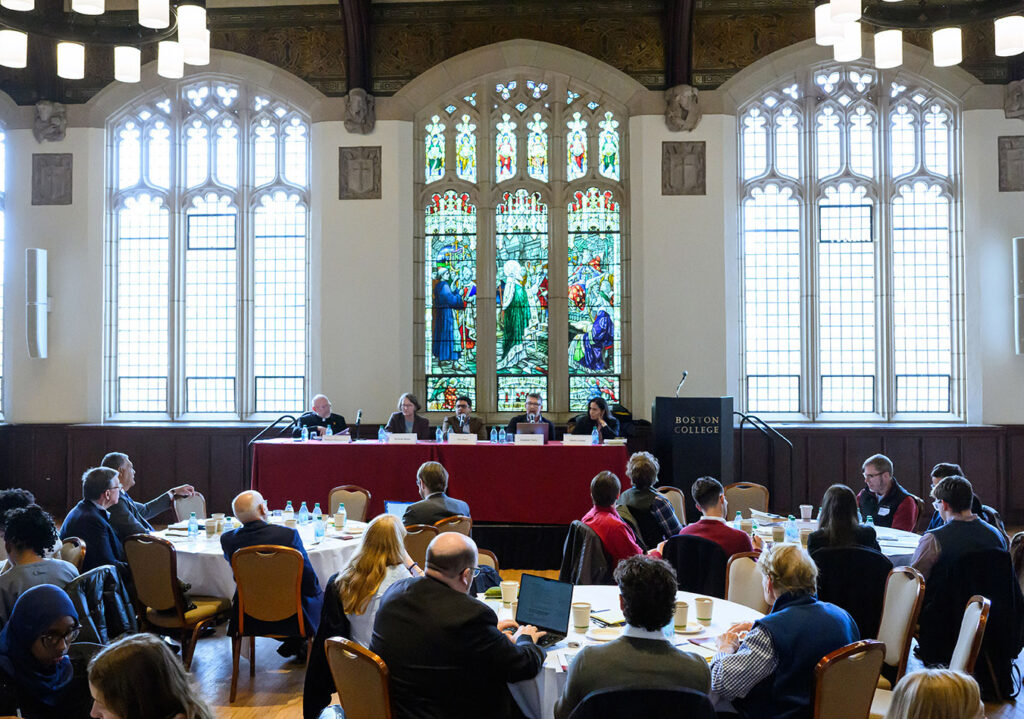
Scholars and theologians from around the world recently gathered at Boston College for a two-day conference titled “The Rule of Law and the Common Good: An Emerging Synergy between Legal Theory and Catholic Social Thought.”
“This conference revealed the power of interdisciplinary collaboration to address difficult ethical and social problems,” said Cathleen Kaveny, Libby Professor of Theology and Law who co-organized the event with fellow law professor and dean of BC’s Morrissey College of Arts and Sciences Gregory Kalscheur, SJ. Other BC Law participants included Dean Odette Lienau and Professor Aziz Rana, who addressed contemporary challenges to the rule of law, bringing a practical bent to the theoretical discussions.
The opening keynote panel on March 12 looked at the history and purpose of Catholic Social Teaching (CST). “Catholic social teaching can best contribute to legal theory on the rule of law when it comes to considering the law affording protection of human rights, non-discrimination, and equality before the law, and compliance by the state with its obligations in international law as in national law,” said participant Frank Brennan, SJ, of Australian Catholic University. He also distinguished that the rule of law is not rule by law, but instead, consists of the substantive protection of human rights, with a goal of fostering the common good.
The following day, Kaveny led a panel focused on defining the rule of law and bridging the interdisciplinary gap between lawyers and nonlawyers. The group gave concrete applications of the conceptual ideals of the rule of law, connecting its principles to areas such as criminal law, constitutional law, and immigration.
Fr. Kalscheur, who moderated the panel addressing what Catholic Social Thought has to say on the rule of law and was quoted in an earlier Boston College Chronicle article, emphasized that at this moment in history, when the rule of law is under stress, the Catholic Social Thought tradition can offer resources that energize renewed commitment to the principle.
Several key themes emerged throughout the course of the conference, including the unique dignity of every human person and the concept of “natural law” as compared to “positive law.” The notion of dignity, rooted in the idea that humans are created in the image of God, merges with the idea of natural law to create guidelines for the rule of law today, shaping how we should address topics such as immigration, war, and moral violence.
The conversations also addressed the role of lawyers in the rule of law. “Do lawyers, because they’re lawyers, have any special obligation over other citizens to uphold and maintain the rule of law?” asked Georgetown University professor David Luban. He described lawyers’ roles as that of trustees of the rule of law, with a fiduciary obligation to uphold the law and not to tear it down. This, Luban explained, is grounded in a conception of common good, which he defined in part as the aim to heal the world. “We are accountable for the laws we enact,” Luban said, and further noted that as trustees, “lawyers have a duty to ensure that those laws are enforced for the common good of the beneficiary.” The beneficiaries, he clarified, are the “we the people” referred to in the Preamble to the United States Constitution.
In her remarks, University of Notre Dame professor Mary Ellen O’Connel focused on the idea of natural law, unpacking the concept that humans possess an inherent system of what is good and just and comparing it to positive law, a system of man-made rules that society constructs. O’Connell emphasized that law’s major purpose is the preservation of peace, while also being a concrete expression of transcendent laws.
On another panel, BC Law’s Rana addressed contemporary challenges to the rule of law, bringing a practical bent to the theoretical discussions. He traced what he referred to as “the breakdown, or indeed the collapse, of the mid-20th century American constitutional project.” Rana provided background on how, over the last century, transitions in and out of wars, the financial crisis, and the undermining of the power of labor have helped lead to the removal of the “mid-century compact.”
Rana also pointed to the hollowing out of intermediate institutions that provide ethical guidance, such as churches and law firms, action that undermines society’s ability to pursue responses. “The church can and must take a stand wherever democracy and the rule of law are threatened,” he said. “Religion is capable of proposing appealing moral visions that tap into the deepest longings of people for moral order in the universe.”
At the event’s conclusion, Kaveny seconded that optimism. The rule of law is under great stress in the United States and around the world, she said, “but, after hearing the converging and complementary wisdom of our distinguished group of international experts in law, philosophy, and theology, I have hope.”
Photograph above by Andres Leiva ’26
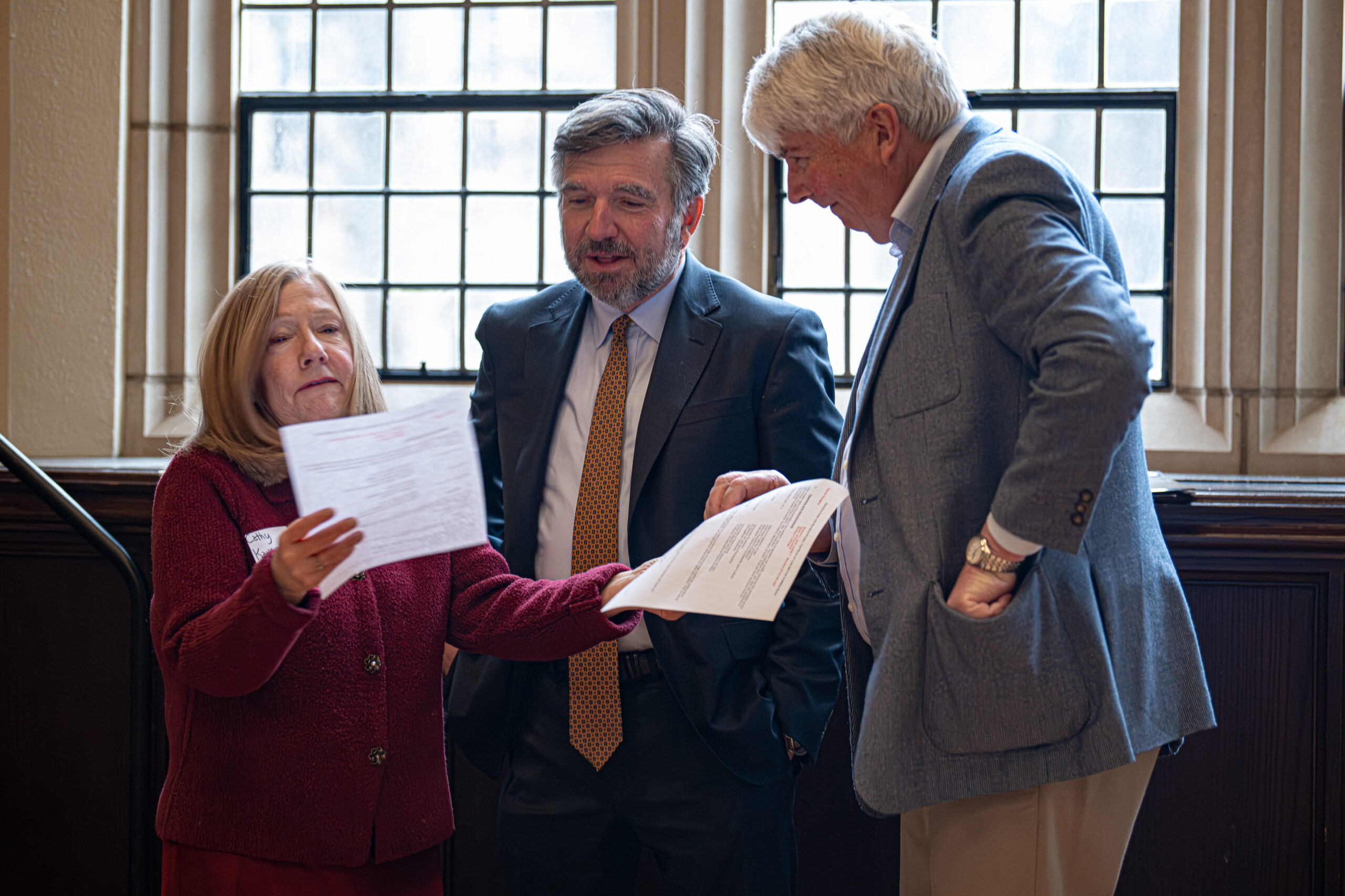
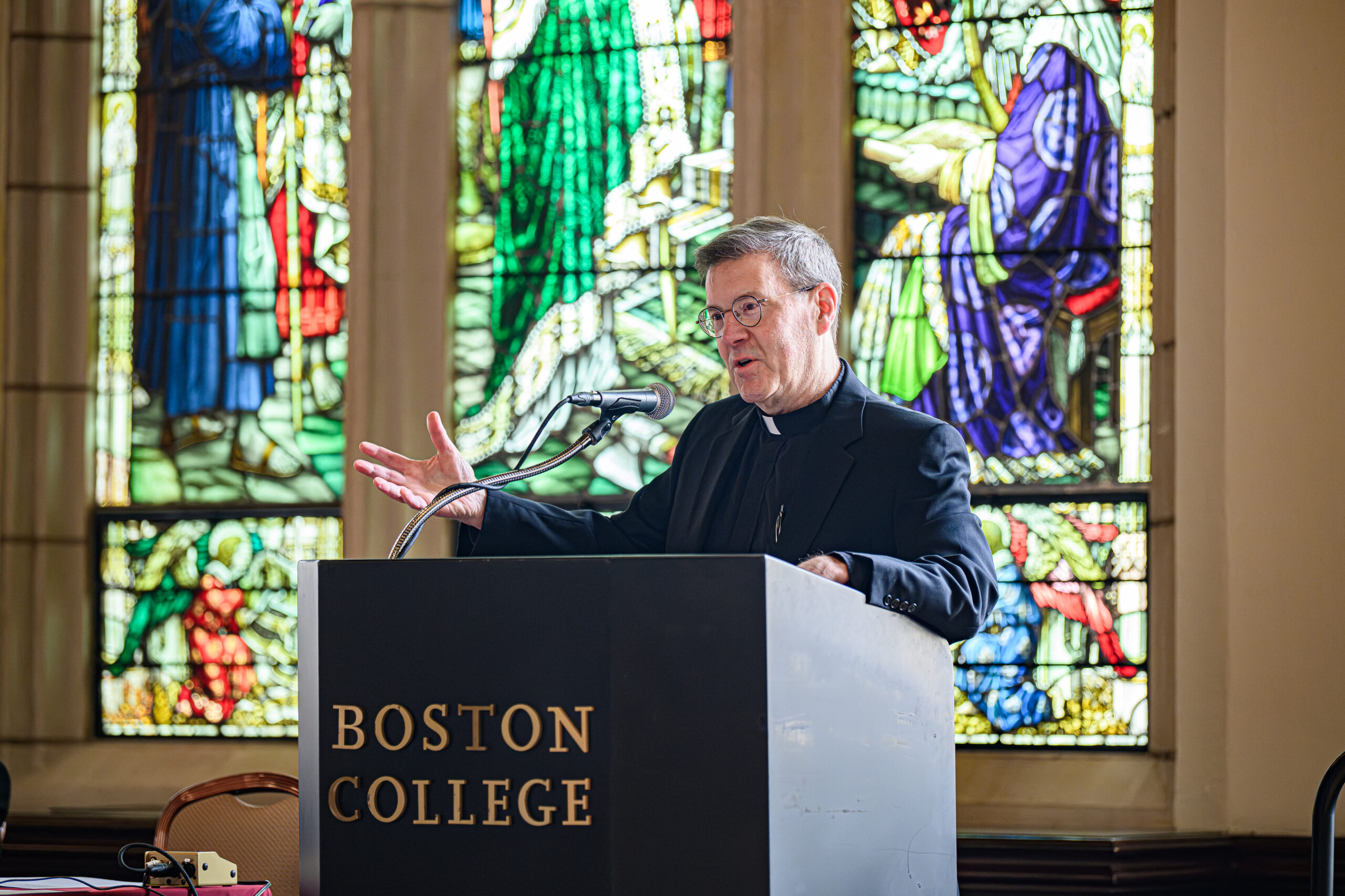
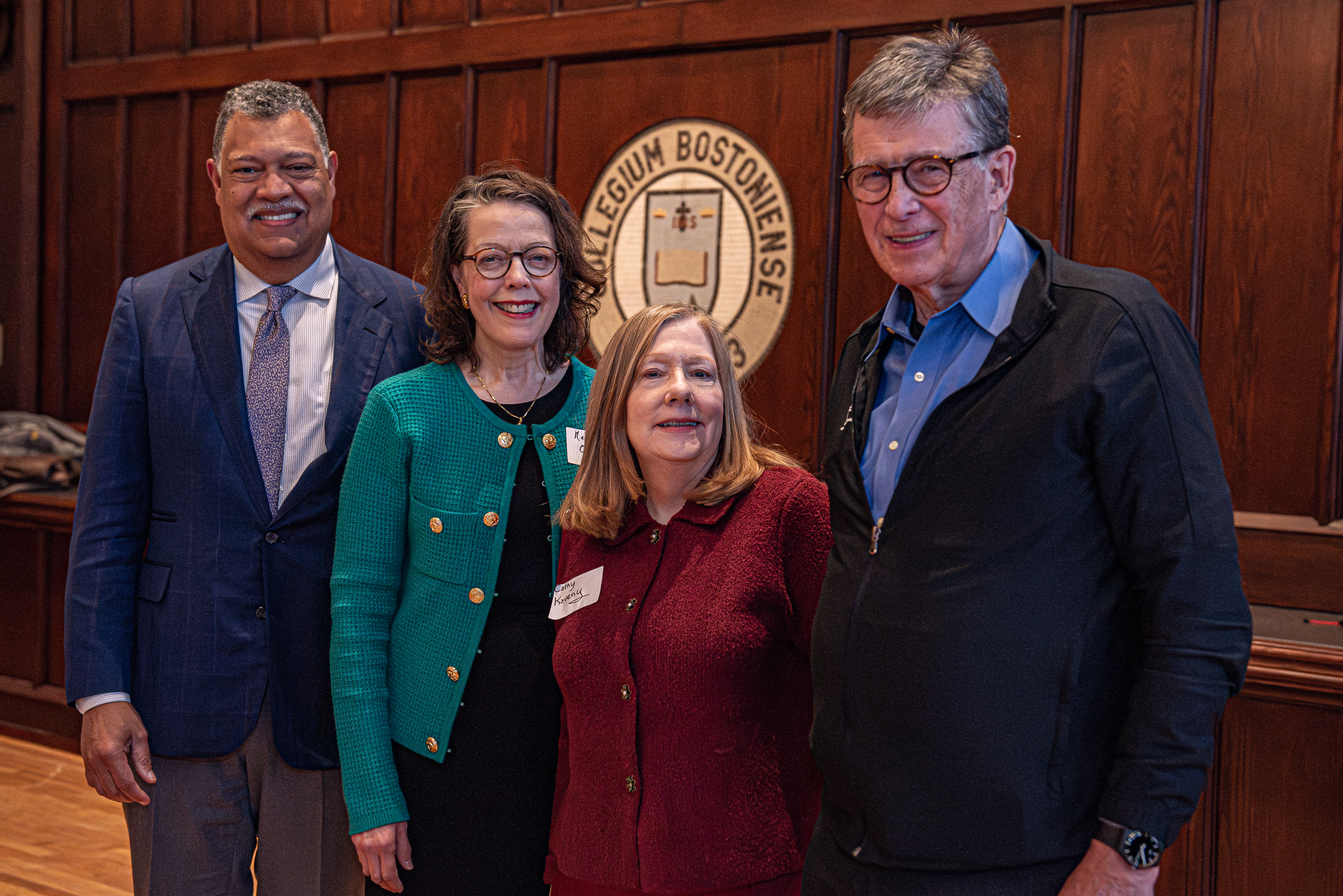
Photographs below by Anthony Tullian