






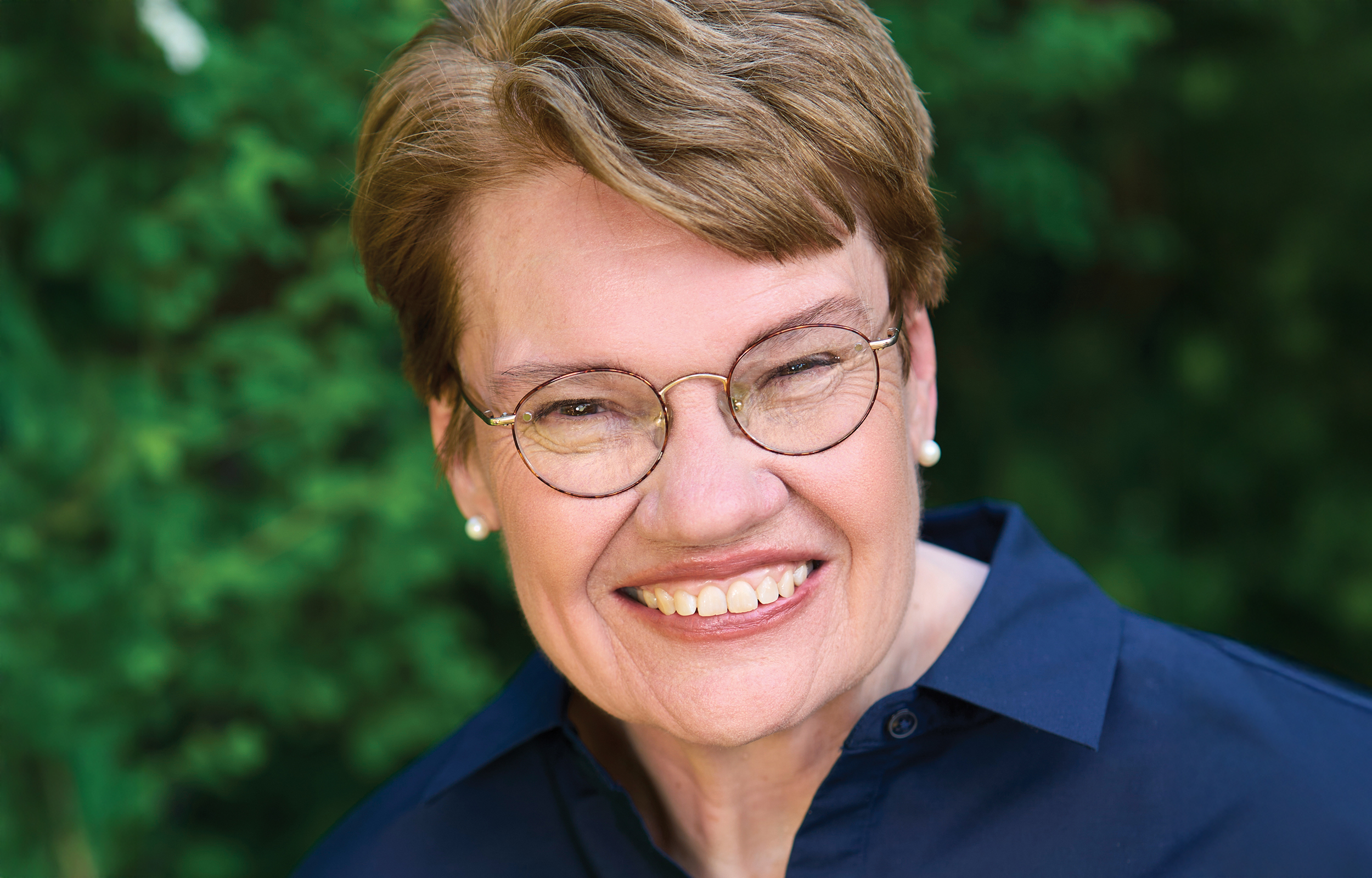
In Sharing Risk: The Path to Economic Well-Being for All, Boston College Law School Professor Patricia McCoy examines how the United States has reached a tipping point after shifting massive financial risks away from government and businesses onto households. The book has drawn remarkable praise. Harvard Law Professor Christine A. Desan describes it as “pathbreaking,” and Gail Hillebrand, former senior leader at the Consumer Financial Protection Bureau, calls it “an amazing blueprint of policy changes necessary to build the United States we all want to live in.”
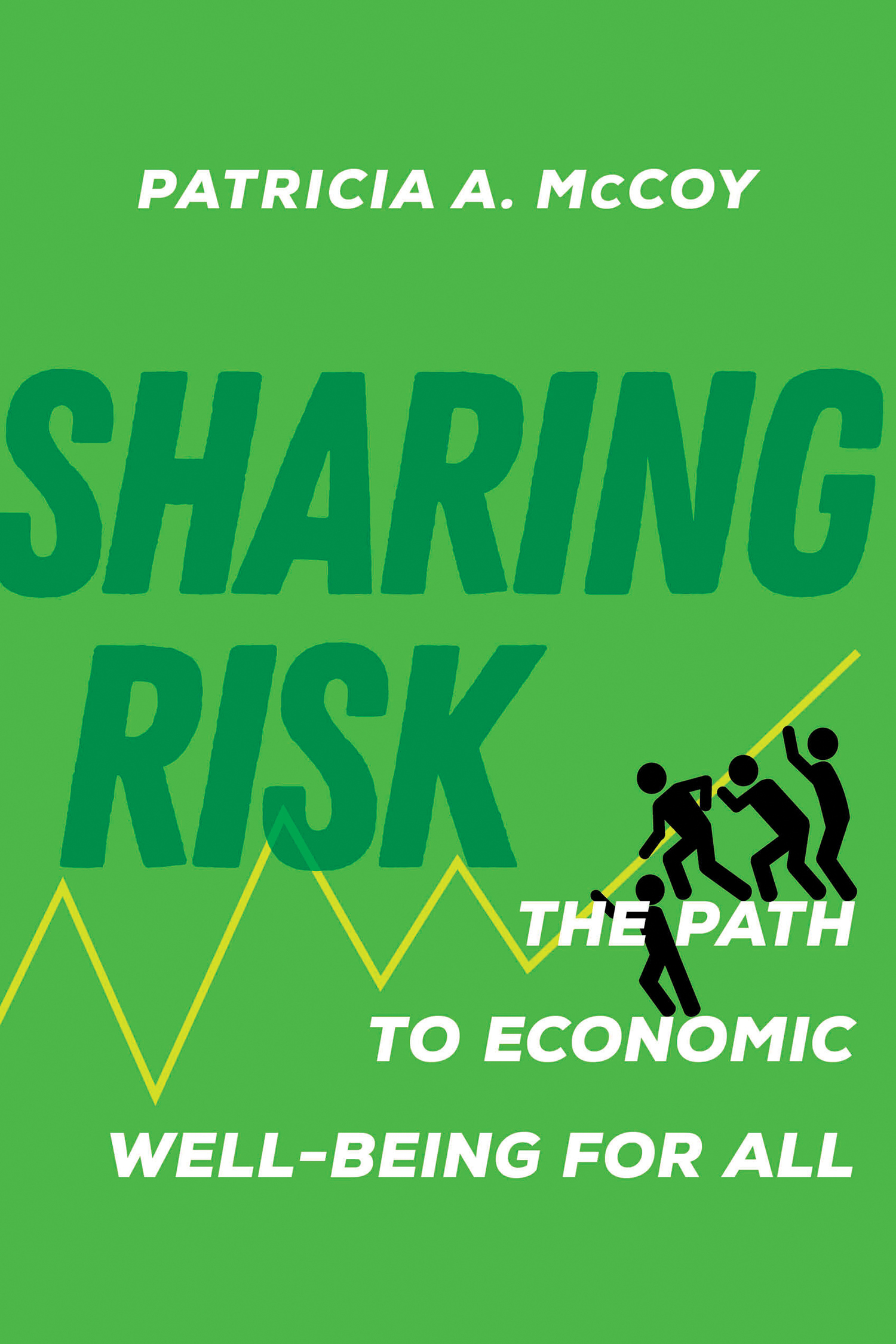
McCoy’s argument begins with a stark reality. Half of American families lack a living income. She explains: “We are not talking about luxuries. We are talking about food, rent, and heat.”
She traces the problem to several long-term shifts. Employers steadily replaced traditional pensions with 401(k) plans that require individuals to bear investment risk. Lawmakers, responding to pressure to lower taxes, reduced safety net programs. Today, unemployment insurance reaches only a small share of jobless workers. Higher education has undergone a similar transition. State subsidies once kept tuition low at public universities, but the withdrawal of public funding has left many families struggling to afford college. These economic changes interact with a labor market that offers fewer stable, unionized jobs. Too many workers now hold part-time, low-wage service sector positions with unpredictable hours and limited benefits.
As a result, the financial risks on ordinary families have ballooned to unmanageable proportions. Too often, policymakers tell cash-strapped households to “just save more” or else incur debt. McCoy maintains that this approach is no longer sustainable.
Instead, she argues, the United States needs to expand its use of risk-sharing arrangements to improve economic security for struggling families. Risk sharing takes a risk that would fall on individuals alone and spreads it across a bigger pool of people. In the process, risk sharing improves social welfare by protecting everyone in the pool from financial losses and affording them peace of mind. Sharing risk is a win-win proposition because it protects more people from risks at lower total cost.
In Sharing Risk, McCoy argues that modernizing risk sharing would help ordinary families attain five key milestones of economic well-being. These include meeting basic expenses, owning a home, affording health care, paying for college, and retiring with dignity. A living income for workers and low-income retirees, expanded eligibility for unemployment insurance, and increased Pell Grants, plus similar reforms would all help families meet essential costs without going into unmanageable debt.
Risk sharing would help households attain five key milestones of a secure financial life: meeting basic expenses, owning a home, affording health care, paying for college, and retiring with dignity.
McCoy’s work distinguishes between consumer financial protection, which governs interactions with credit, and the deeper structures that allow families to thrive. “Consumer protection is necessary,” she explains, “but if incomes are too low, then people will still be forced to borrow for basic necessities. Consumer protection can prevent exploitation, but it cannot solve the underlying problem of economic insecurity.”
Despite the challenges, McCoy sees genuine reasons for optimism based on the nation’s 90-year tradition of risk sharing. More recently, during the pandemic, Congress temporarily expanded the Child Tax Credit, unemployment insurance, Medicaid, and Affordable Care Act subsidies. Those measures lifted millions of children out of poverty and demonstrated the power of risk-sharing systems. Just last summer, Republicans expanded the Child Tax Credit yet again, showing that targeted reforms can still gain traction.
McCoy’s policy vision is shaped by years in public service. She helped establish the Consumer Financial Protection Bureau during her time at the Treasury Department and also served on the FDIC’s Advisory Committee on Economic Inclusion. Both roles addressed the depth of financial precarity across the country and convinced her that large-scale structural reform is both necessary and realistic. In January, McCoy was named faculty director of the Law School’s Rappaport Center for Law & Public Policy.
At BC Law, McCoy has found a community that aligns with her commitment to justice. She observes, “Boston College is an extraordinarily special place. Its mission explicitly includes social justice, and that conviction shapes everything I do.” Her hope is that Sharing Risk encourages policymakers and citizens to believe that a stronger, fairer system is possible. “We have seen what works. The question now is whether we have the will to make these changes permanent.”