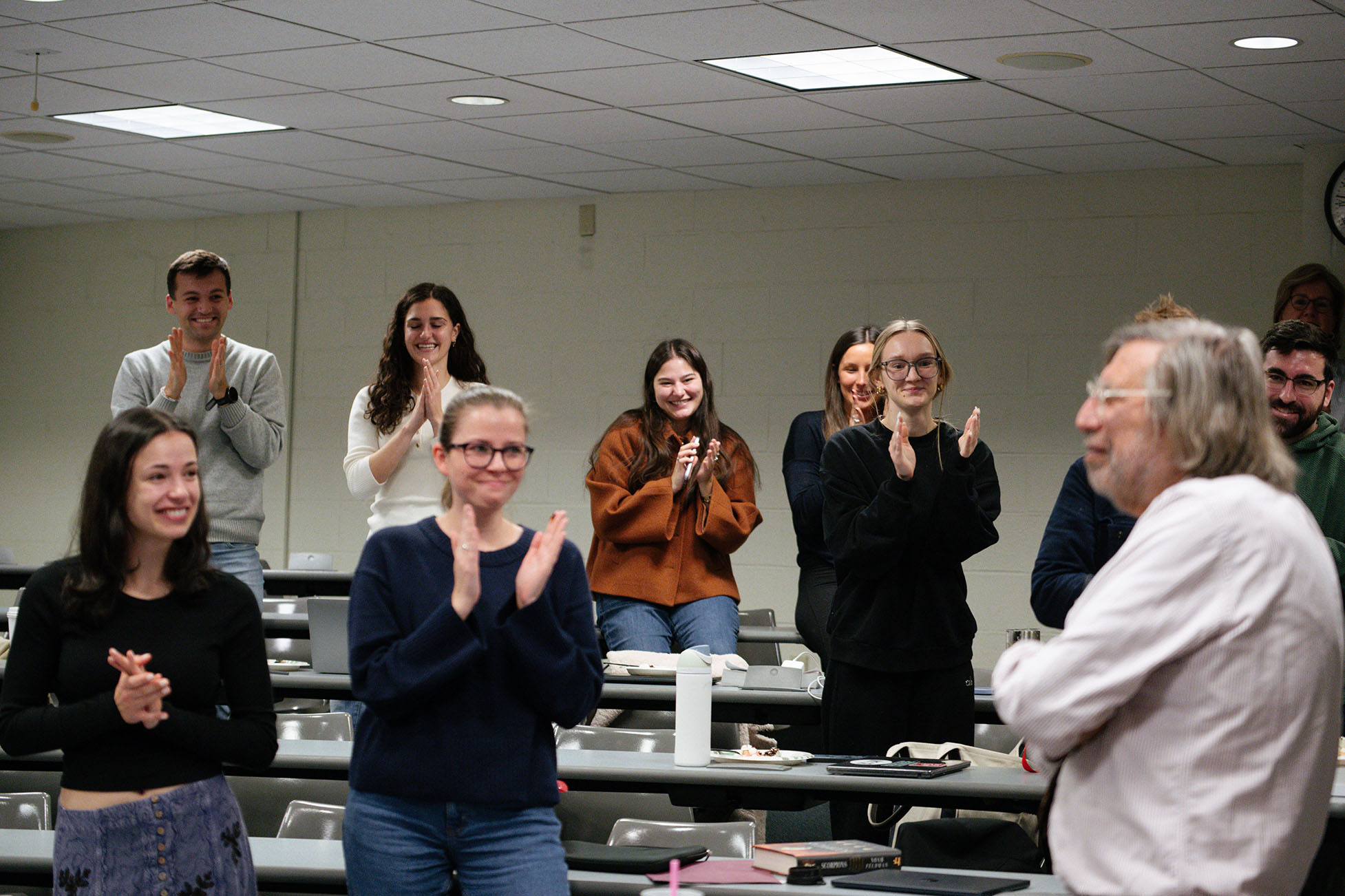






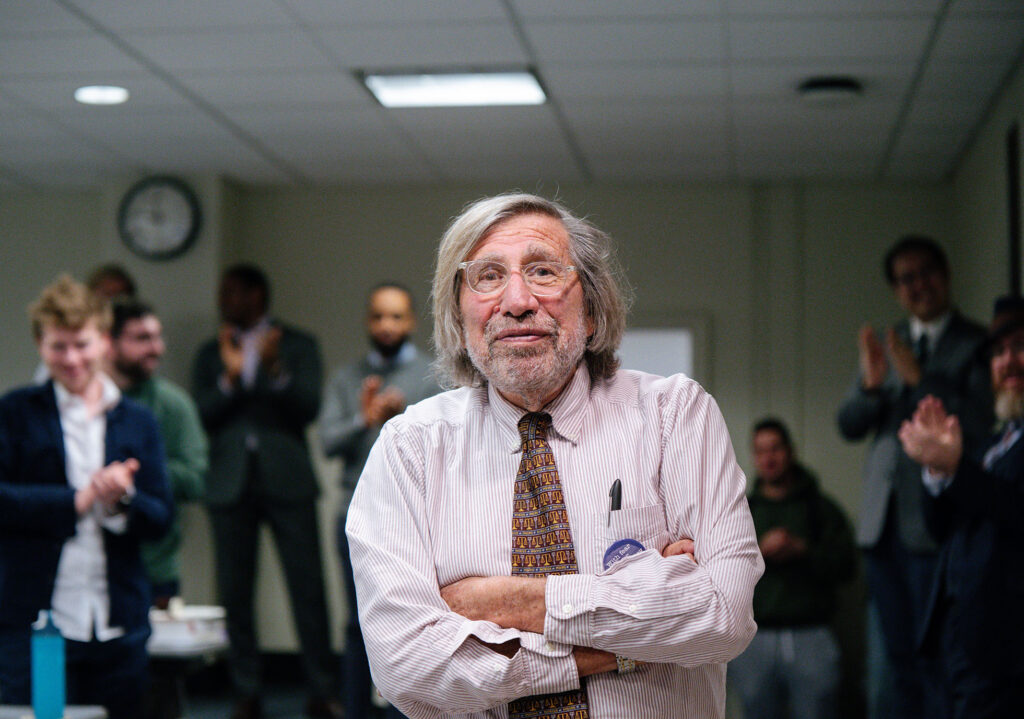
Professor Robert Bloom ’71 walked into his final class at Boston College Law School on November 25 wearing a button that read, “With fear for our democracy, I dissent.” The message’s impact, the echoing words of Supreme Court Justice Sonia Sotomayor, reflected the values that have guided him throughout his more than 40-year teaching career: moral clarity and a willingness to speak openly about threats to democratic life. Students immediately noticed the button, and it set the tone for a class that blended doctrinal discourse with deep reflection.
As he entered, Bloom stopped beside a student who will begin her career at Ropes & Gray after graduation. He handed her a Ropes & Gray tote bag and noted that he had seen it and thought of her.
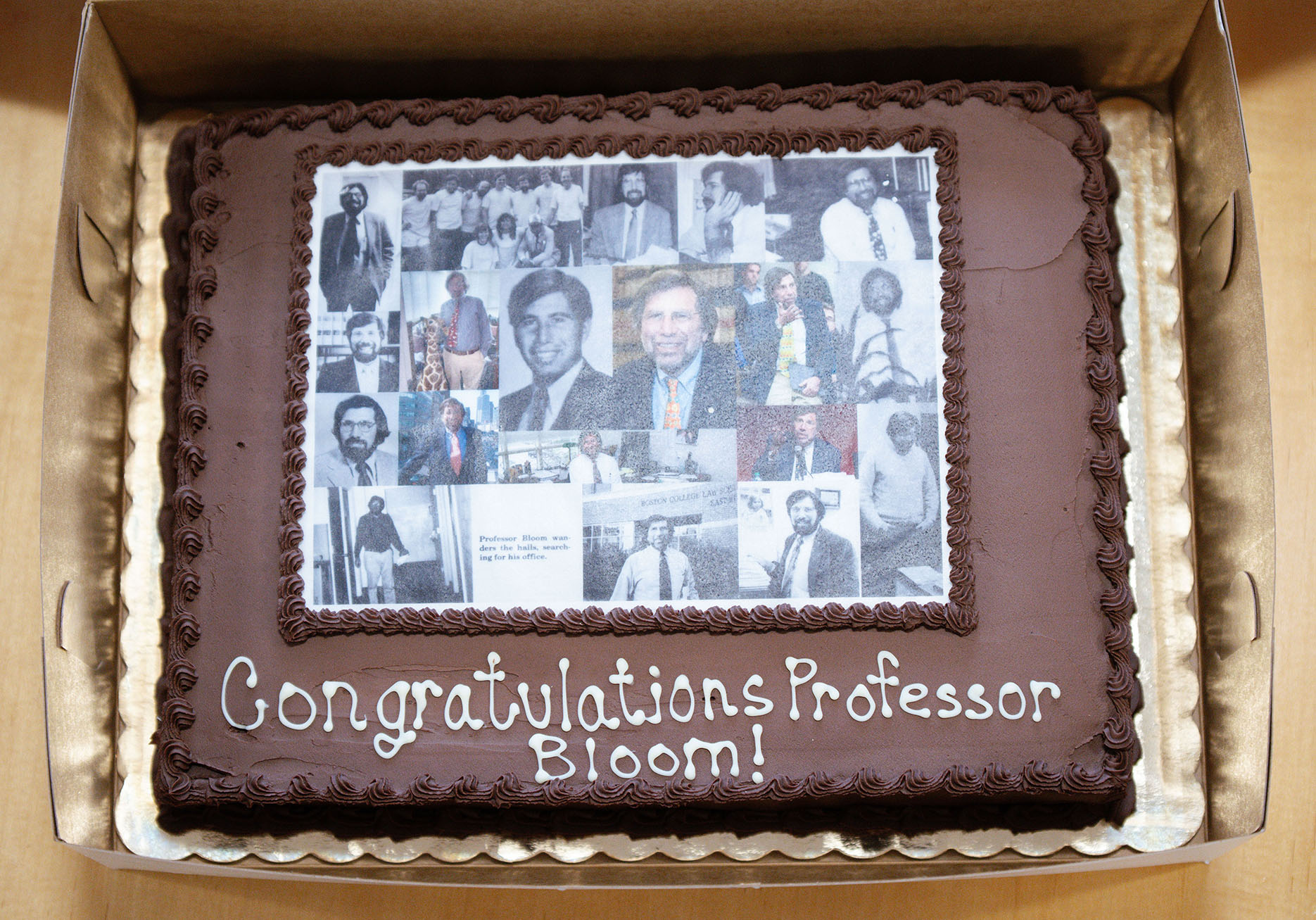
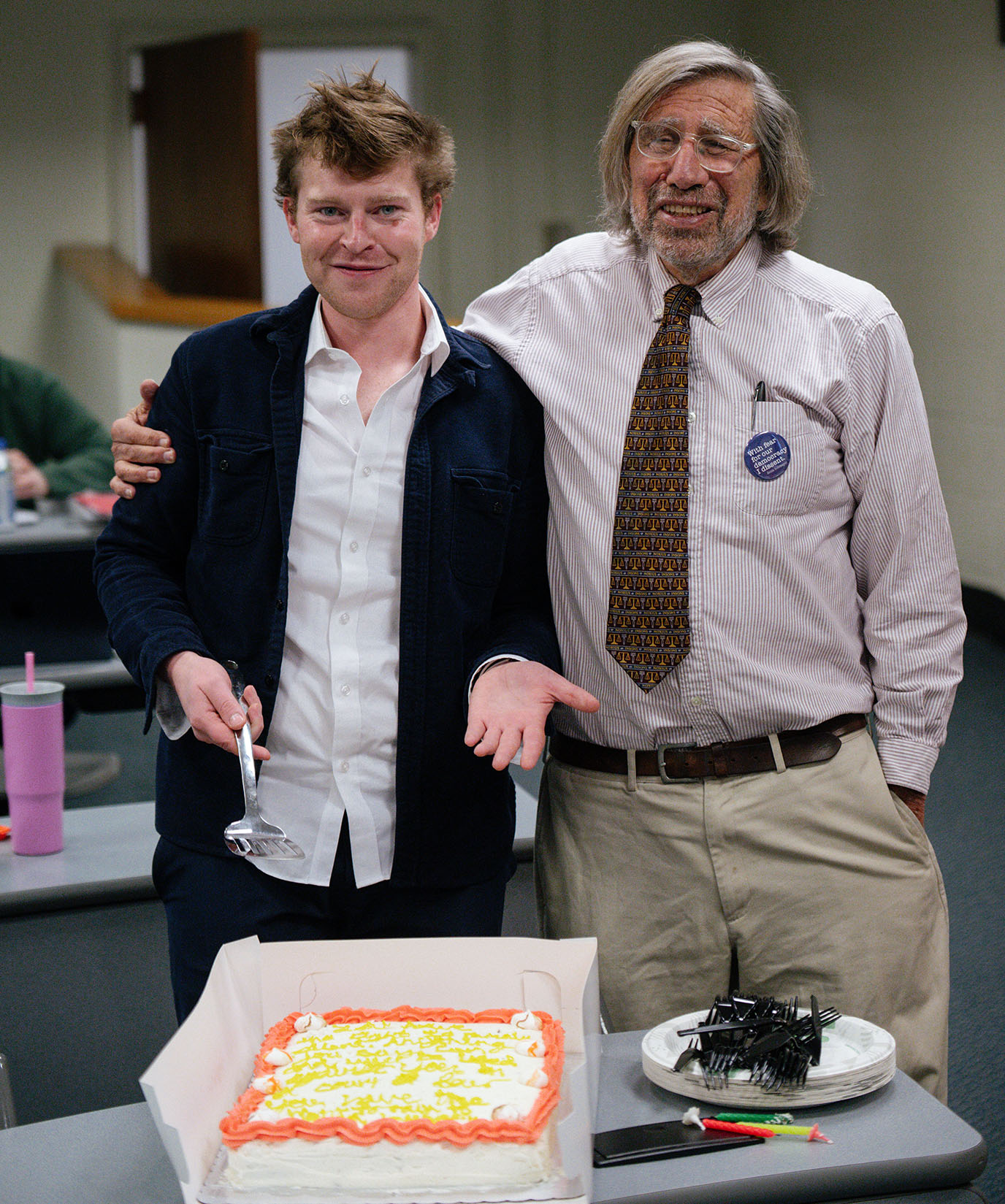
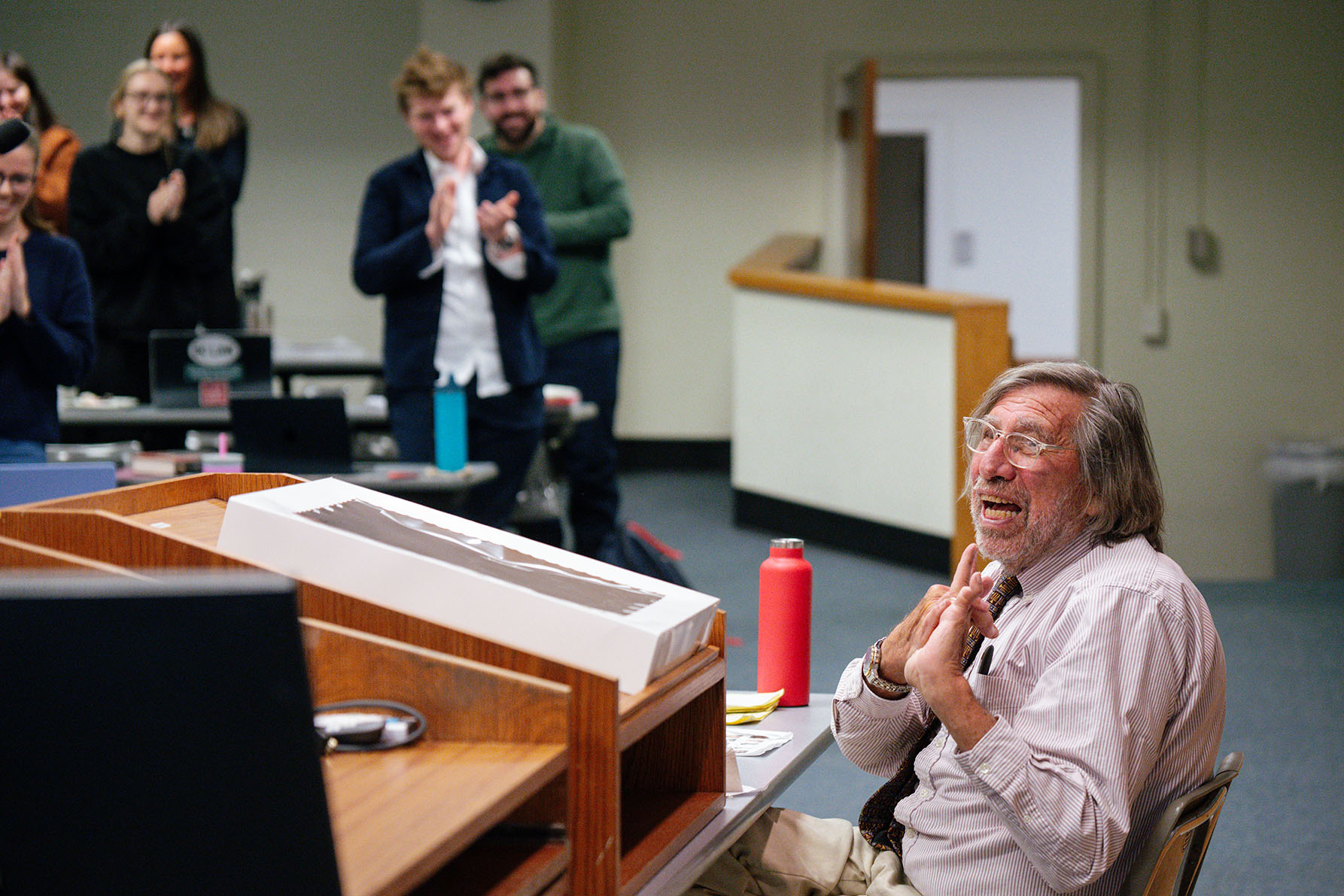
A cake sat at the front of the room, baked by another student with the help of their aunts. Bloom thanked the student by name and acknowledged the effort that went into preparing something for the entire class. He used the moment to ask which students had November birthdays and then led everyone in singing Happy Birthday to each one. The room filled with laughter, applause, and warmth as students passed cake to each other across rows.
The class marked the end of an era for generations of students who learned Civil Procedure and Criminal Procedure through Bloom’s signature mix of warmth, humor, and deep commitment to community.
Once the room settled, he began his final Fourth Amendment lecture. He walked the class through emergency exceptions, automobile exceptions, and special circumstances. His last case was Terry v. Ohio, a fitting choice for someone who has spent his career examining police practices and constitutional limits on government power. He connected the discussion to a 1983 study of 4.4 million police stops in New York City in which data illustrated that 83 percent of these stops involved Black or Hispanic individuals while only 10 percent involved white individuals. Bloom spoke about the lived impact of these encounters and the importance of understanding the Fourth Amendment as a safeguard for individual rights.
Bloom’s background shaped both his scholarship and his voice in the classroom. He grew up in public housing and experienced discrimination because of his Jewish heritage. The early experiences informed his deep interest in policing, discretion, and equal protection. His civil rights work in Savannah and later in Cambridge provided a foundation for the practical and ethical focus that defined his teaching. Over the decades, he became a national expert on criminal informants and wrote casebooks as well as volumes for Moore’s Federal Practice. He also coauthored scholarship with students, a practice that allowed many young lawyers to publish early in their careers.
Bloom’s longtime friendship and collaboration with Professor Mark Brodin also became part of the BC Law culture. Their shared casebooks, their conversations, and their playful rivalry became well known to generations of students. Brodin says, “Bob Bloom is what BCLS is all about: a consummate educator, total commitment to students, and outsized social conscience. I am so proud to call Bob a close friend, co-author, and colleague for over 40 years. His departure will leave an unfillable hole in our school.”
Bloom’s legacy at BC Law is tied closely to his approach to community. He handed out index cards on the first day of Civil Procedure to learn his students’ backgrounds and interests. He used the information to create connections among them, such as when he discovered three former dancers and began calling on them together. He launched ugly sweater contests. He called students by their preferred names and made sure they felt seen.
His dedication extended far beyond the classroom. In 2020 he created the Bloom Emergency Aid Fund to support students experiencing crises. Many students had turned to him over the years with urgent needs and Bloom often responded by handing them his own credit card. The fund is now an endowed resource for those facing hardship.
Bloom has long said that BC Law trains “architects of society,” a phrase he attributes to former Dean Father Robert F. Drinan, SJ, who served as dean during Bloom’s years as a student and who later became the first Catholic priest elected to Congress. Bloom has embodied that belief through his work with the Public Interest Law Foundation, his leadership on the Admissions Committee, and his persistent advocacy for diversity and inclusion. He consistently emphasized that good lawyers must be smart, must care, and must maintain a moral conscience.
Bloom is on sabbatical this spring. He ended his teaching career the same way he lived it: showing care for his students, fostering joy, and centering moral conscience. That final day of class, in a room filled with cake, birthday songs, and gratitude, the BC Law community celebrated him in return. He will officially retire at the end of the Spring 2026 semester.
Photographs by Andres Leiva ’26
A longer BC Law Magazine Q&A with Professor Robert Bloom is available here.