







Much of what is happening with startup companies, from governance to financing to culture, has Professor Renée Jones concerned. The renowned expert in securities law, who served as director of the Securities and Exchange Commission’s Division of Corporation Finance from 2021 to 2023, is calling out the danger being posed by rapid deregulation of securities markets.
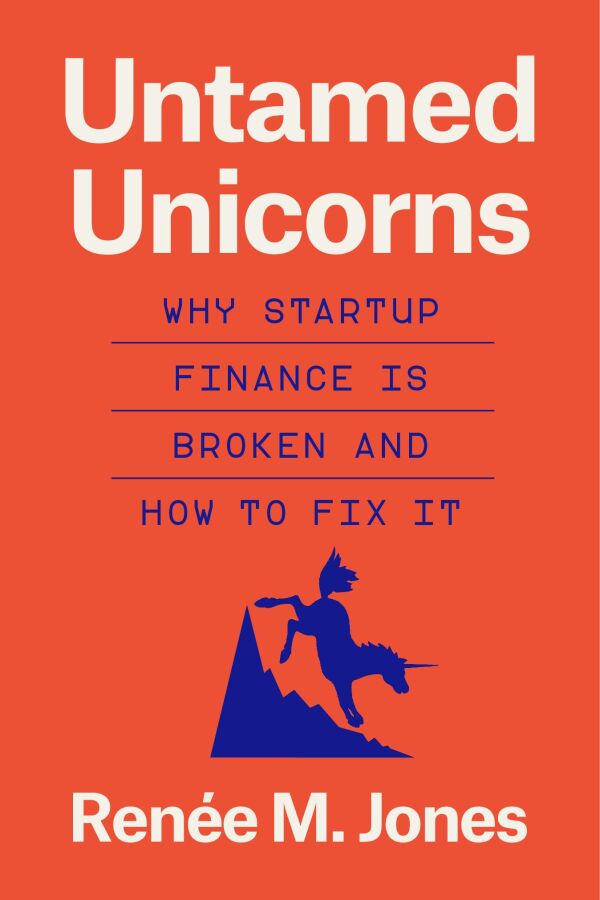
That action has contributed to the emergence of what are being called “unicorns,” private startup companies valued at $1 billion or more. In her new book, Untamed Unicorns: Why Startup Finance is Broken and How to Fix It, published by Harvard University Press, Jones sounds the alarm about the risks unregulated unicorns are posing to investors and the public, including the financial security of everyday investors saving through their retirement plans.
The term “unicorns” was originally coined to convey just how rare and extraordinary these businesses were, but the startup ecosystem has since changed dramatically. Whereas there were just an estimated 40 such companies in 2013, that number has ballooned to an estimated 1,500 today, a number that also includes so-called “decacorns,” valued at over $10 billion, and even “centicorns,” valued at over $100 billion.
The changes became possible over the past few decades due to statutory and regulatory shifts that loosened oversight in a number of ways. The National Securities Markets Improvement Act of 1996 (NSMIA) lifted the 100-investor cap on private investment funds, allowing for an unlimited number “qualified purchasers,” causing private fund assets to skyrocket to over $15 trillion by 2024 (from about $200 billion when NSMIA was adopted). Later, the JOBS Act of 2012 raised the registration threshold for private companies, at which financial disclosures are required, from 500 to 2,000, further shielding startups from public insights into their dealings.
Asked about what the driving force behind these efforts was, Jones explained that “many of these legal changes were adopted at the behest of financial industry groups, including venture capital firms and private equity funds.”
Additionally, new trends in governance structures at startups have ceded more power to founders and weakened oversight by their investors and directors. In the rush to get in on attractive deals, venture capitalists have increasingly agreed to dual-class capital structures. These structures grant founders “supervoting” shares, typically 10 votes per share, which greatly entrenches their power, making the possibility of their dismissal very unlikely even when warranted by poor performance or misconduct.
And amid this rash of deregulation has come the advent of “blitzscaling,” where founders are encouraged to pursue rapid growth, often at the expense of developing viable business strategies. Jones points to FTX, Theranos, WeWork, and Uber as examples of what she calls the “unicorn governance trap,” which has contributed to various high-profile scandals.
The problems caused by these phenomena operate on many levels. Retail investors may be lured by unduly optimistic projections to invest in SPAC-backed startups as they enter public markets, only to see the value of their investments fall precipitously, or may entrust their savings to crypto asset startups like FTX or Gemini and find themselves frozen out of access to their funds.
“Under the current administration, the SEC has embarked on a campaign to ‘make IPOs great again’ by deregulating public companies—eliminating mandatory quarterly reporting and slashing public company disclosure requirements,” Jones said in situating where we find ourselves in the current political climate. “The SEC is blaming onerous regulations implemented by statutes like Sarbanes-Oxley and Dodd-Frank for the shrinking number of public companies, but this argument is off-base. Deregulation has led to the decline in public offerings and the number of public companies, so further deregulation will likely make things worse.”
Jones added that she feared it may take another financial meltdown to build the public pressure necessary to spur serious efforts at reform in Congress. She outlines a suite of reforms in the book to head off much of the danger being posed by the current system, including regulating unregistered capital raises and private trading markets, fixing employee option exemptions, and reversing the loopholes expanded by the JOBS Act to register companies with large shareholder bases.
As Larry Gennari, columnist at Boston Business Journal, summarized in a recent review, “Jones has some ideas and she persuasively uses history to frame future reforms that could protect investors and our overall economy from outsized risks and harm.”
Photograph by Diana Levine