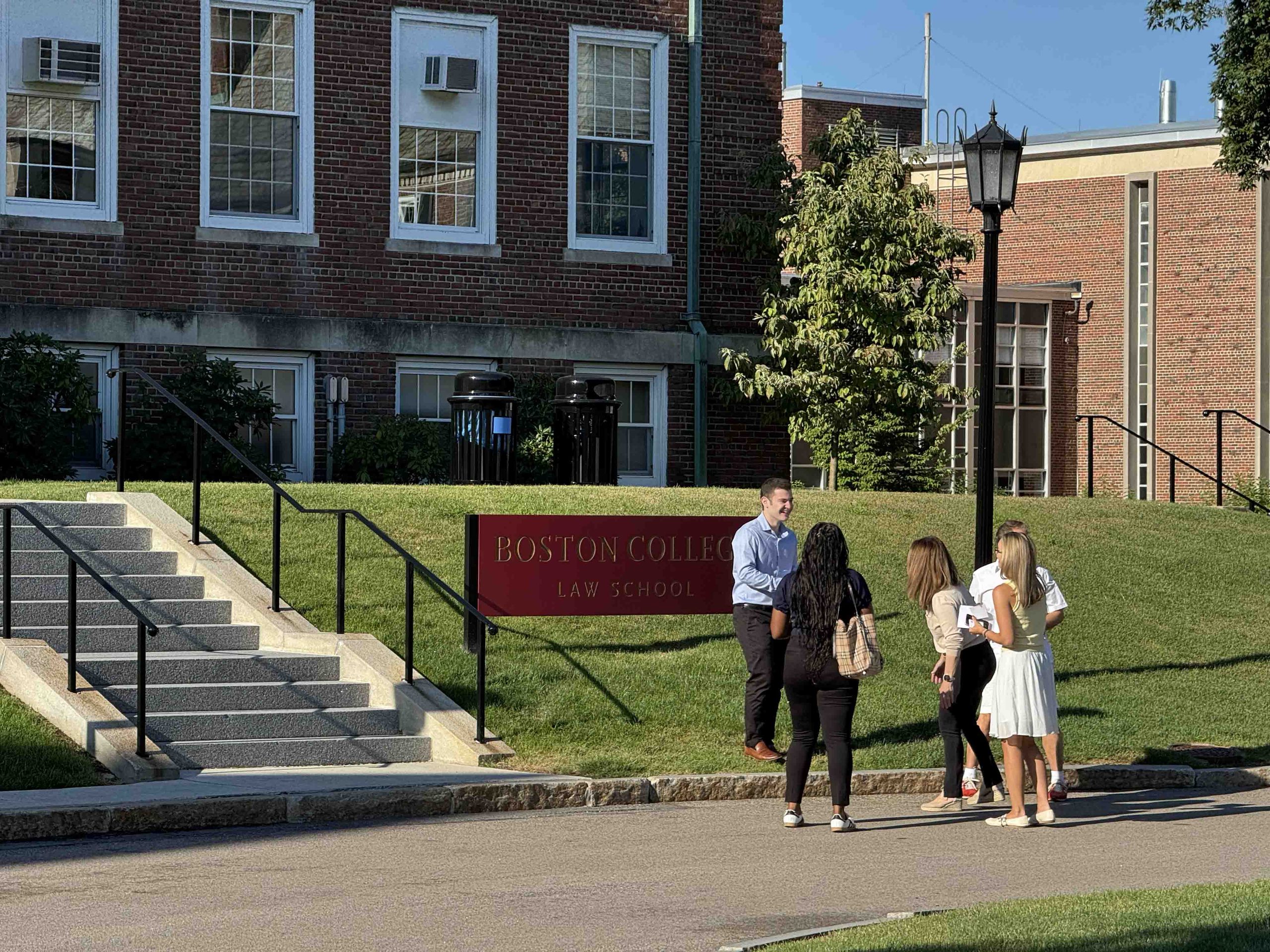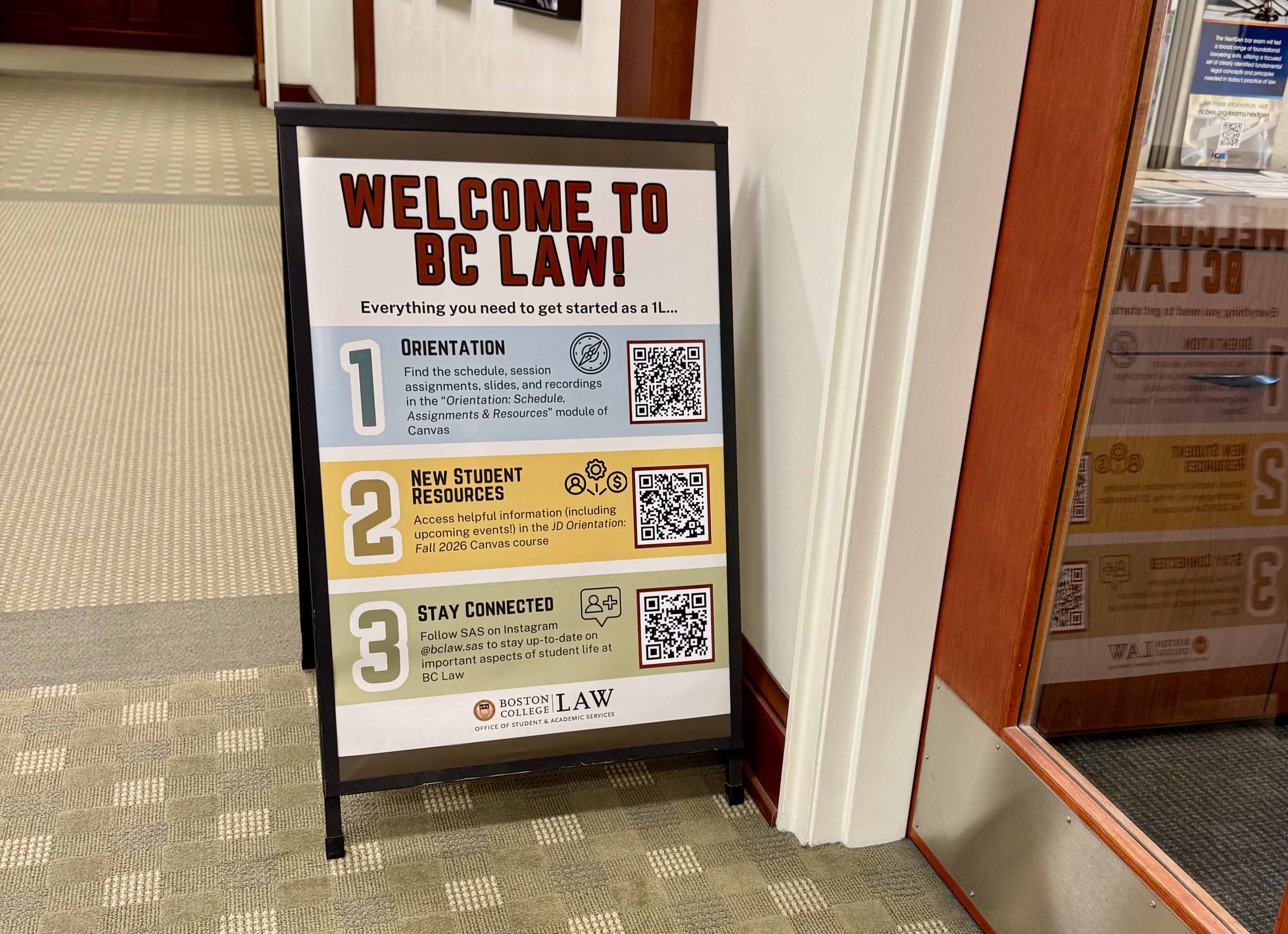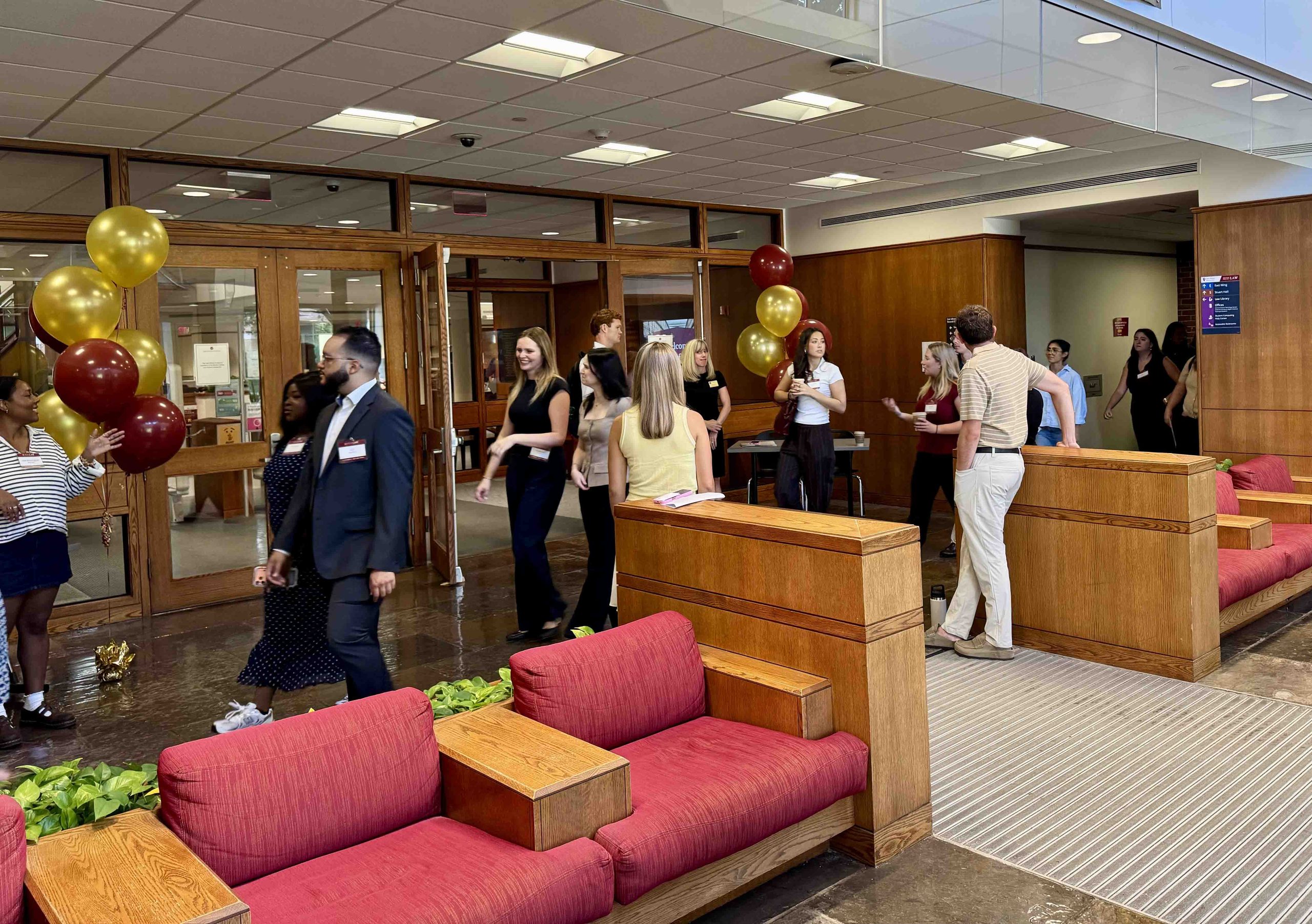






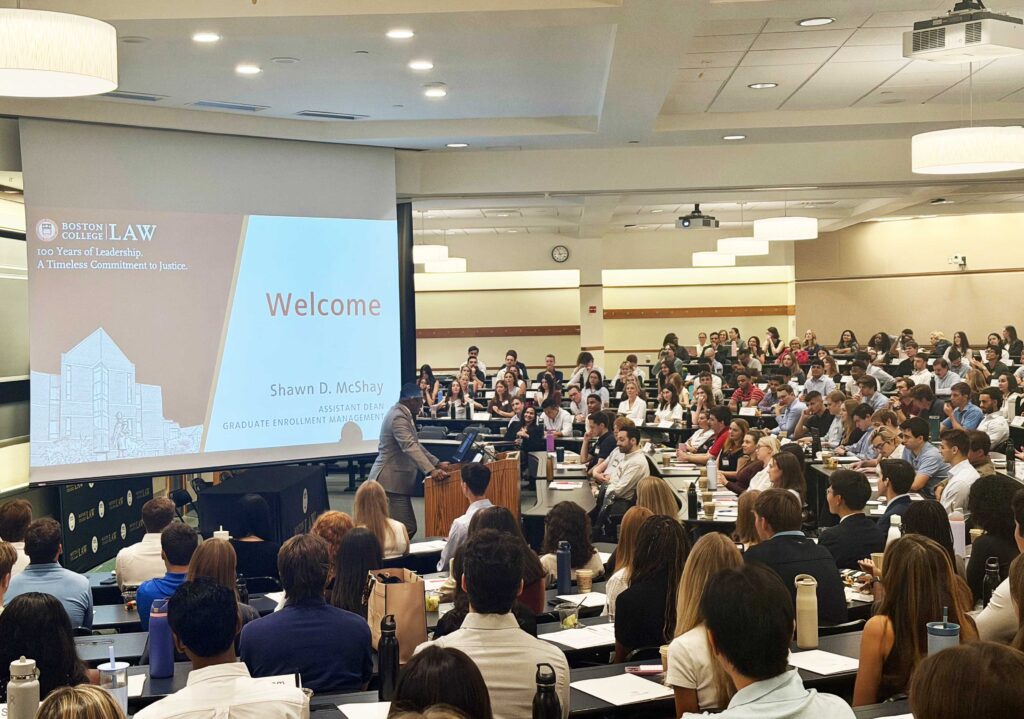
On the first morning of Orientation, faculty, staff, and current students of Boston College Law School gathered to welcome the incoming Class of 2029, a class that carries a distinction none before it has held. As the final entering class of the Law School’s first century and the founding class of its second, these 238 students make up what the BC Law is calling its Centennial Class.
From a record-setting pool of nearly 8,500 candidates, the new 1Ls have a median profile of a 168 LSAT score and a 3.85 undergraduate GPA, the highest in Law School history.
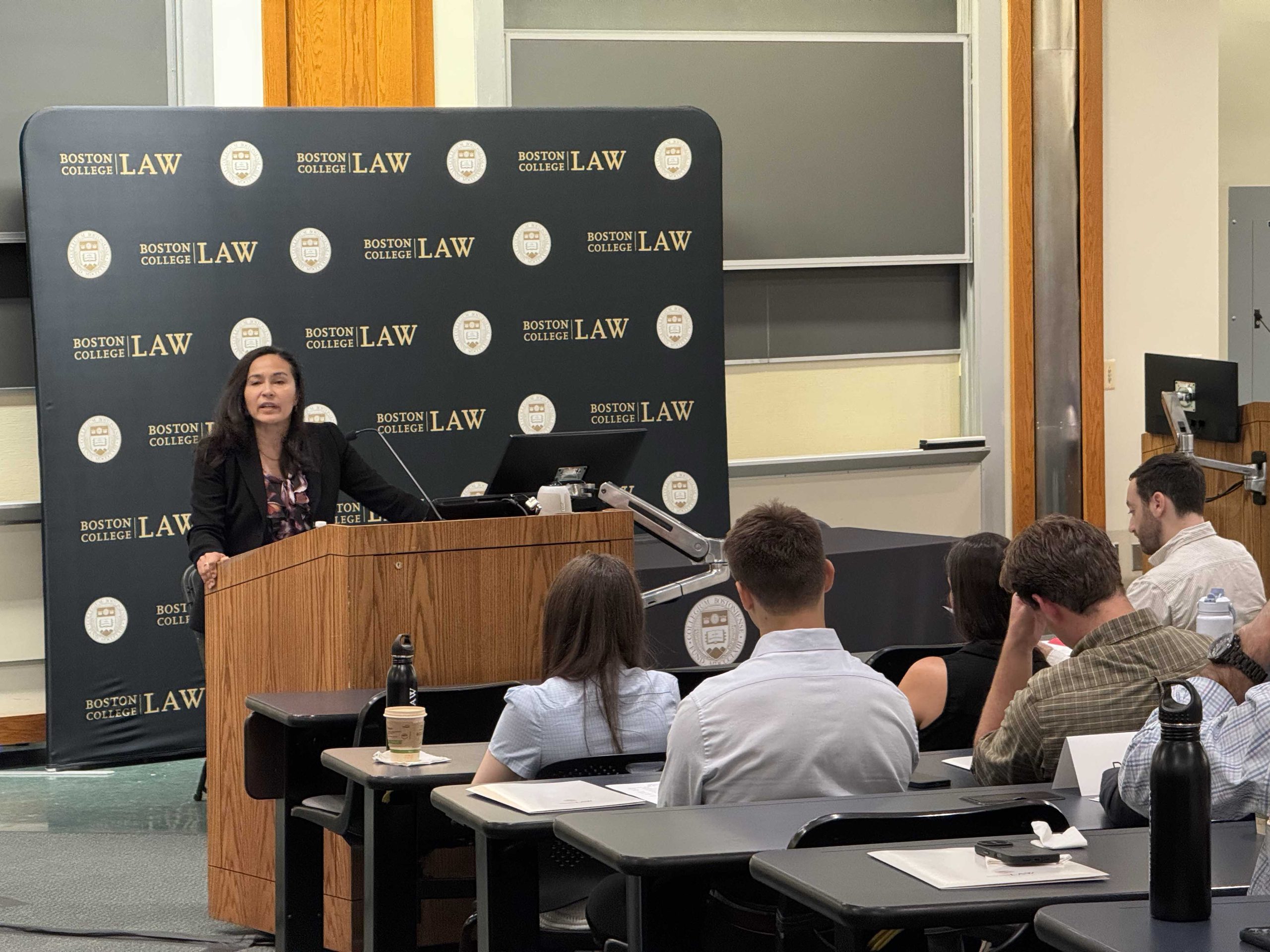
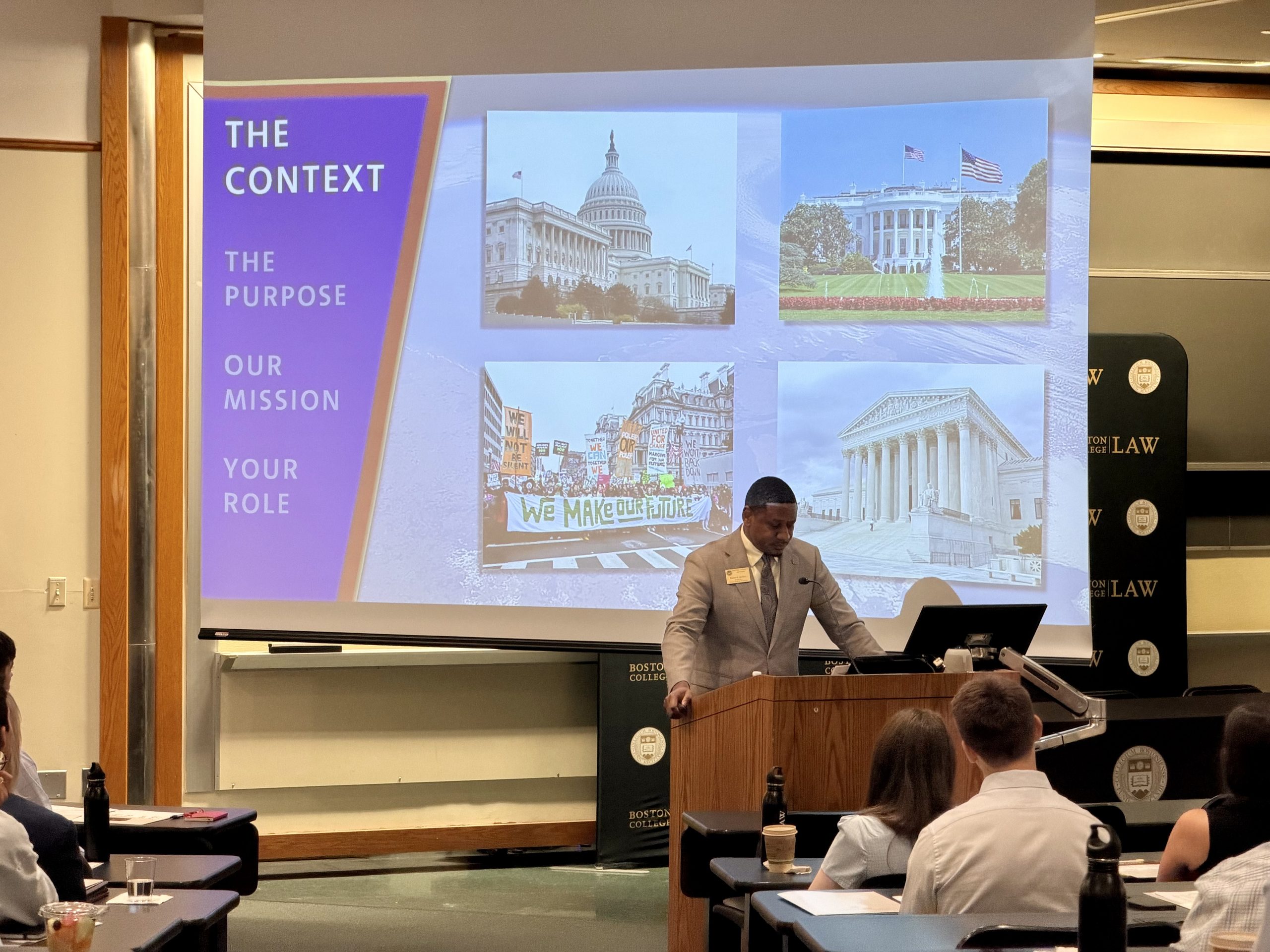
“Today marks the official first day of your legal career,” said Shawn McShay, assistant dean for graduate enrollment management, in his welcome to the incoming class. “This year, we collectively experienced another distinctive enrollment season, and it has been an absolute privilege to navigate the intricacies alongside you.”
Dean McShay reminded the class of the moment they are stepping into, one marked, he said, by global unrest, political polarization, rapid technological change, and hard questions about the fairness of public institutions. But he framed that uncertainty as an opening rather than a burden. “We see a world that is finally demanding the very best of what a lawyer can be,” he told the room. “Society is actively calling for leaders who do not just understand legal doctrine, but who possess the moral courage, empathy, and intellectual foundation to defend human dignity when it is most fragile.”
That call lands with particular weight for this class. Nearly a century ago, in 1929, BC Law was founded on the Jesuit principle that the law is not merely a tool for advocacy, but a vocation rooted in service and the protection of human dignity. As the Centennial Class, McShay told students, they stand as a bridge between the Law School’s first hundred years and its second, carrying the responsibility of defining what justice will look like for the next hundred.
By the Numbers
The Class of 2029 arrives having earned degrees from 104 colleges and universities across 60 undergraduate majors, with top feeder schools including Columbia, Dartmouth, Emory, Georgetown, Notre Dame, Stanford, and UVA, alongside strong local representation from Amherst, Boston University, Holy Cross, UMass Amherst, Tufts, and Harvard. Thirty-three members of the class are BC undergraduate alumni, on their way to becoming “Double Eagles.”
Students hail from 29 states and the District of Columbia, with more than a third calling Massachusetts home, and New York, New Jersey, Florida, and California also well represented. A number of BC Law students have joined the Centennial Class from countries across five continents, including Chile, China, Colombia, France, Greece, Ireland, Italy, New Zealand, Nigeria, Pakistan, and Singapore.
The average age of the incoming class is 25, with ages ranging from 21 to 51; a quarter of the class is over 26, bringing significant work and life experience into the classroom. Seventy-seven percent of the class identifies as first-generation law students, including many who are the first in their families to earn a four-year college degree.
Nearly half the class is multilingual, with 31 languages spoken among them, from Arabic and Mandarin to Portuguese, Greek, and Latin, along with proficiency in American Sign Language.
A Class of Many Stories
The Class of 2029 brings an unusually wide range of experience. Nearly a quarter of the class arrives from federal service, including roles at the Department of Justice, the CIA, the NSA, and the CDC; several have held Top Secret clearances. Four classmates previously worked for US Senator Ed Markey, a BC Law alumnus, and another worked for the Middlesex County District Attorney’s Office, led by fellow alumna Marian Ryan.
Veterans of the Air Force, Army, Coast Guard, Navy, and Marine Corps sit among the class, including a former Marine Corps ordnance officer and an Army Special Operations Command veteran who helped negotiate an international military cooperation agreement.
Classmates have served with Teach for America, the Peace Corps, Engineers Without Borders, and the International Justice Mission; co-founded a protein-shake kiosk company; managed a $40 million annual climate grant portfolio at the Barr Foundation; published research on river conservation and public perceptions of law enforcement; traveled solo across 28 countries; and competed as an NCAA Division I alpine skier. One classmate spent time as a commercial lobsterman, hauling 65 traps at sea.
Dean McShay closed his remarks by naming what he hopes will define the class’s three years together. “Every single one of you belongs in this room,” he said. “We did not choose you solely for your LSAT scores and GPAs. We chose you for your voice, your resilience, and your demonstrated potential to lead.” He urged students to see one another not as competitors, but as future co-counsel, and to ground their legal education in empathy and mutual respect.
“As our Centennial Class, you have been handed a unique responsibility,” McShay told the students. “With it, lead with integrity, anchor your work in human dignity, and never lose sight of the mission that brought you through our doors.”
Photos by Nathaniel Kenyon and Daniel Chou