


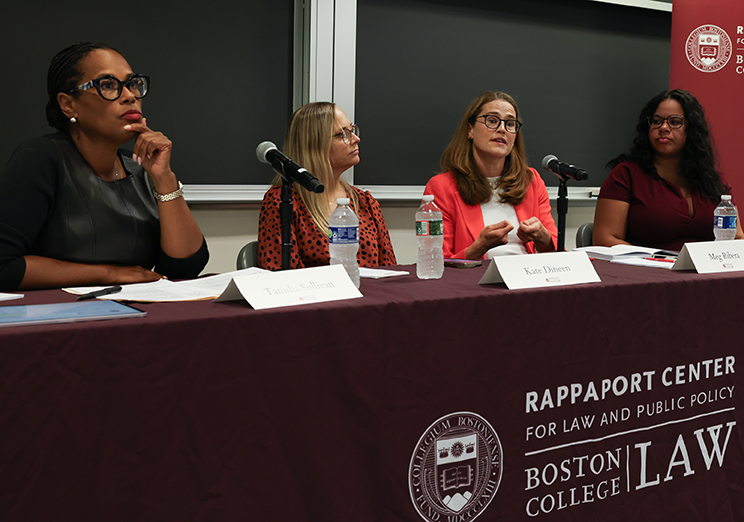
Energy was high in Boston this summer. Scottish soccer fans flocked to the city as the World Cup kicked into gear and tall ships docked at Boston Harbor as the country celebrated its semiquincentennial. Now, Boston policymakers are working to sustain the momentum. On September 30, policymakers met for a Rappaport Center for Law and Public Policy panel titled “The Serious Work of Making Massachusetts More Fun” to discuss initiatives that aim to create a more vibrant Boston.
Corean Reynolds, inaugural director of nightlife economy for the city of Boston is “up against the narrative—nationally, internationally—that Boston is boring” and is working to bring about a “cultural shift.” That work became especially timely this summer as the World Cup, Tall Ships and Mass250 converged. The city met the moment with the creation of downtown social districts and the convening of watch parties, among other events.
The hunger for a cultural shift is felt in the legislature as well. Meg Ribera, chief of staff and general counsel for state Senator Julian Cyr, discussed recent legislative efforts to enable these types of municipality-driven initiatives. Proposed by Senator Cyr and a few colleagues, the “Fun Agenda” encompasses diverse opportunities to enliven the Commonwealth, including loosening restrictions on alcohol and funding cultural programs and agrotourism. Ribera explained that municipalities in Massachusetts do not have “unfettered access to do whatever they want” and the “Fun Agenda,” like the Economic Development Bill, would give control back to cities.
In the background of a vibrant Boston summer is the reality that many residents are moving away to avoid the rising costs of living or to pursue business ventures elsewhere. To combat the wave of outmigration, Kate Dineen, president and chief executive officer of A Better City, sees fun as a tool to retain local talent and make Boston more economically competitive. “Fun is serious business” she remarked, citing the need for a rich cultural fabric, reliable transportation system, and investment in small businesses.
Implementation remains its own challenge. Tanisha Sullivan ’02, an executive at Sanofi handling external engagement, health equity strategy, and corporate affairs, said that “a very wonderful [public policy] idea will die on the vine” if one does not consider an issue’s historical context and human impact.
Policy issues are rarely “clean” questions but always arrive with a “history attached,” Ribera said. “Part of policymaking is separating the political question and the policy question from all of that accumulated political baggage, while still not dismissing sometimes very legitimate concerns.”
One of those concerns includes public safety. “Safety is one of the number one pillars of having a vibrant nightlife,” Reynolds said. The city has led trainings with businesses about preventing drink tampering and sex trafficking. “We’re really thoughtful about how we create these spaces, not just for women, but for everyone.”
Reynolds emphasized that nightlife does not just involve alcohol but means different things to different communities,” noting that her core mission is community building and ensuring safe “third spaces” where people can gather.
“No good public policy happens absent the people and community,” Sullivan said, urging students not to forget the people they serve.
Photograph by Reba Saldanha